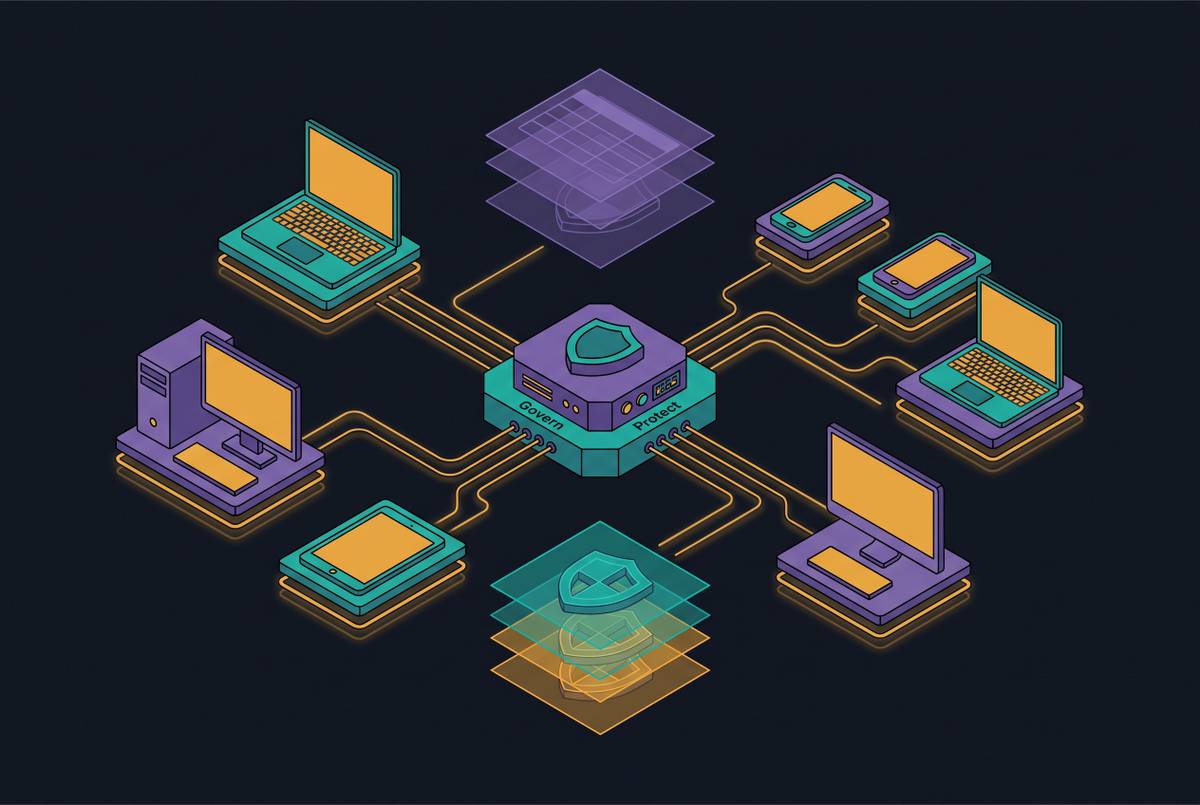
Device Management and Identity Protection Integration Gaps
Separate device and identity systems create exploitable gaps attackers routinely abuse.
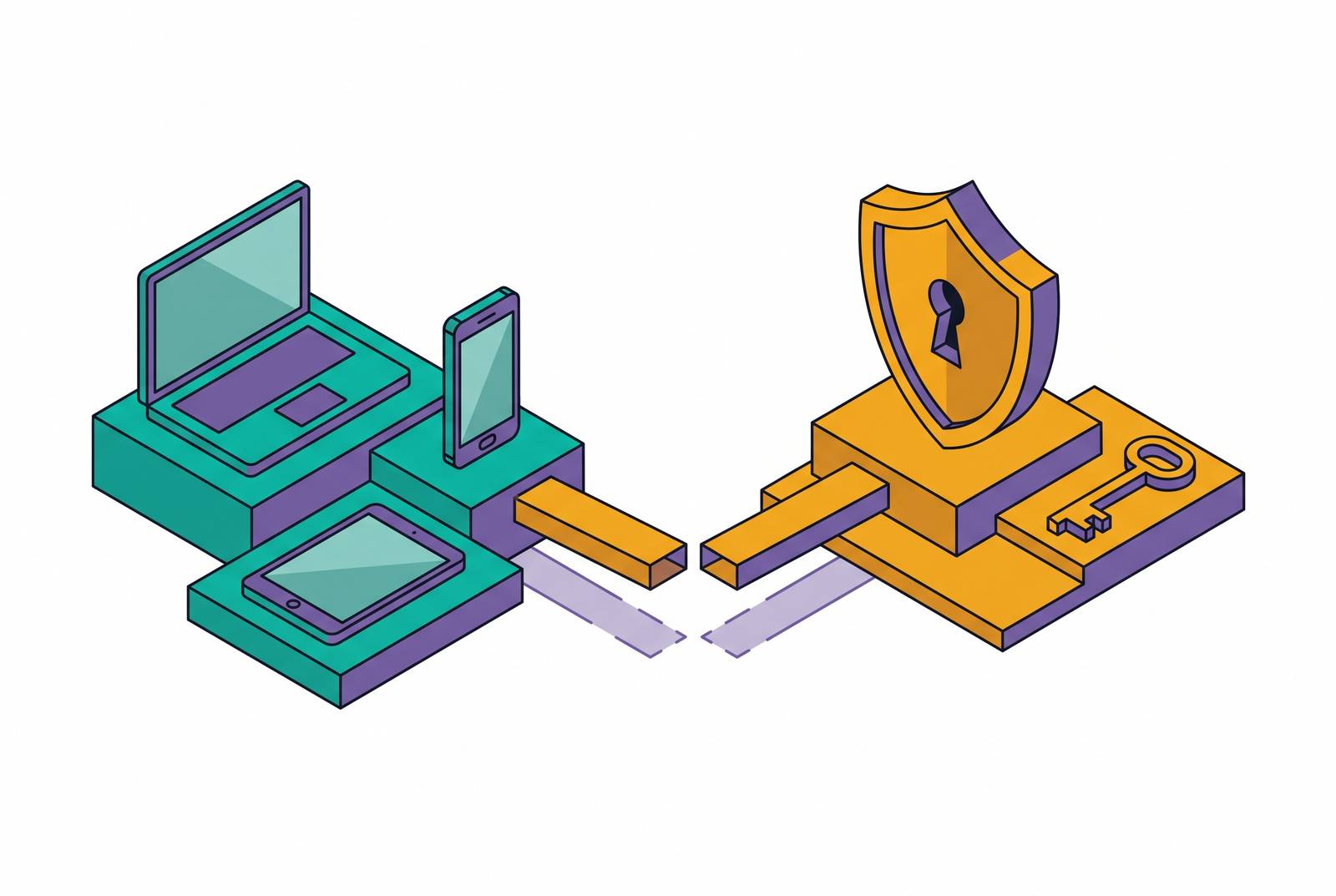
Device management and identity protection grew up as two separate disciplines solving two separate problems, and most organizations still run them that way. That separation carries real architectural cost and cannot simply be patched with a connector; device posture and identity signals get evaluated by different systems at different moments, with no shared line of sight between them, and attackers exploit exactly that seam.
Mobile Device Management traces its lineage to fleet control: enrollment, policy push, remote wipe. The goal was compliance, full stop. If a phone had the right configuration and could be wiped on demand, MDM had done its job. Identity and Access Management came from a different place entirely, directory services and authentication, built to answer one question: is this the right person with the right credential and the right permission. Device state rarely entered that equation, since in the world IAM was built for, it carried little weight.
Each discipline matured inside its own reporting line. MDM sat under IT operations, IAM sat under security or a dedicated identity team, and the two rarely shared a budget owner, a vendor relationship, or a renewal cycle. The working assumption on both sides was that the other domain belonged to someone else. That division held up fine in an on-premises world where the company owned the device, controlled the network, and issued the credential from the same directory that governed the building badge. It stopped holding up the moment users, devices, and apps came apart from the corporate perimeter. Nobody designed these two systems to share state, because for a long time, they didn't have to.
What "integration" between the two systems actually requires, and where it breaks down
Real integration means two things happening at once. Device posture, patch level, encryption status, whether the machine is still in compliance, needs to be legible to the identity system at the exact moment it decides whether to grant access. And the reverse has to work too: a compromised credential or a strange login pattern needs to trigger something on the device side, a quarantine, a forced re-enrollment, an outright revocation.
Most vendors describe their API integration in these terms, but the mechanics rarely support the claim, and that gap between marketing language and actual behavior is where the risk lives. A shared enforcement point requires MDM, directory services, and conditional access to trade state in real time, not on a nightly sync. Without it, the failure mode is mechanical and predictable: a device drifts out of compliance, MDM catches it and flags it, but the identity system already issued a session token an hour earlier, and that token stays valid until it expires on its own schedule. The device and the credential get judged by two different clocks, and nothing bridges them.
Even where the API connection exists, the two systems often can't agree on what a "device" is. One vendor keys off a hardware serial number, another off a certificate, a third off an enrollment ID. That mismatch alone produces reconciliation gaps no amount of API documentation fixes, because the systems aren't arguing about policy; they're failing to agree on the noun the policy applies to. The Cloud Security Alliance's 2024 survey found 71% of IAM leaders name non-standard and legacy applications, ones that don't speak modern identity protocols, as their top obstacle to closing that gap.
The siloed tool problem as a business reality, not just a technical one
This is not an abstract architecture complaint. It shows up as headcount, attention, and budget, and organizations often treat it as a diagram problem when the deeper issue is staffing. Every additional tool brings its own alert queue, its own configuration screen, its own reconciliation task, and attention is a finite resource no matter how the org chart is drawn.
Picture the stack most mid-sized organizations actually run: patching lives in one console, endpoint protection in another, identity management in a third. Nobody signed off on that sprawl deliberately; it accumulated tool by tool, each one solving a real problem in isolation. The organizational cost is that the MDM team never sees identity alerts, and the IAM team never sees device compliance drift. Neither team holds the full picture, because neither team's tool was built to show it to them.
This looks like a technology gap but behaves like a staffing shortfall. GuidePoint Security's State of IAM Maturity report found only 23% of organizations qualify as high performers in IAM maturity, and the reasons split almost evenly: 54% point to a lack of the right technology, 52% to a lack of in-house expertise. Buying a fourth console fixes neither number. It just adds a fourth thing the understaffed team has to correlate by hand, which is the opposite of what procurement usually promises when the purchase order gets signed.
How unmanaged and employee-owned devices widen the gap in practice
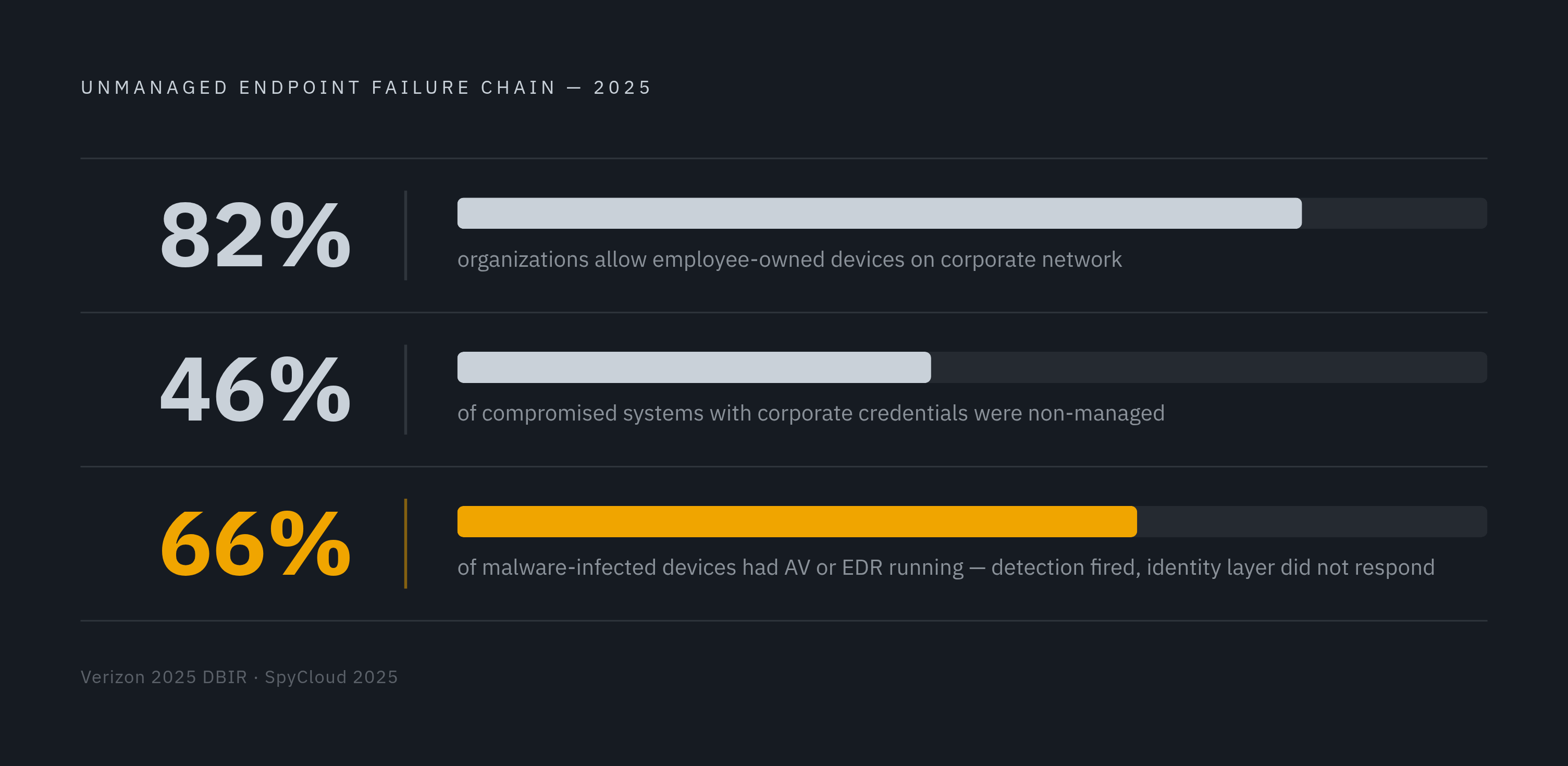
Bring-your-own-device policy turned this from an inconvenience into an open door. Mordor Intelligence found 82% of organizations allowed employee-owned phones and tablets onto the corporate network in 2025, up from 67% just two years earlier. That is the unmanaged endpoint population, and it is growing faster than most security programs can account for it.
The mechanism is straightforward and unforgiving. A user opens a laptop that IT has never enrolled, types in a valid username and password, clears multi-factor authentication without issue, and the identity system does exactly what it is supposed to do: it lets them in. What it cannot see is whether that laptop is fully patched, whether its disk is encrypted, or whether it is already carrying malware. Verizon's 2025 Data Breach Investigations Report found that 46% of compromised systems carrying corporate credentials were non-managed devices. Written policy against BYOD does not change that number, because the identity system never asks the device for its papers in the first place; it only asks the user for a password.
Contractors and third parties carry the identical gap, just wearing a different badge. The credential gets issued, often through the same identity provider used for full-time staff, but the device behind that credential stays a total blind spot. Verizon's 2025 DBIR found breaches involving external partners doubled year over year, now accounting for 30% of all breaches, up from 15% the year before.
Endpoint security alone does not close the loop either. SpyCloud's 2025 Identity Threat Report found 66% of malware-infected devices had antivirus or EDR installed at the moment the malware ran successfully. Detection fired at the device layer, correctly. Nothing connected that detection to a decision at the identity layer, so the access stayed live regardless of what the endpoint tool had already flagged.
Non-human identities as the integration gap's fastest-growing blind spot
The gap is not confined to laptops and phones, and this is the part most security teams still budget for as an afterthought, if they budget for it at all. The ratio has already flipped: Rubrik Zero Labs puts non-human identities at 45 times the number of human ones across the modern enterprise. Narrow the lens to cloud-native and DevOps environments, and Entro Labs' H1 2025 research puts that ratio at 144 to 1. Service accounts, API keys, certificates, and now AI agents are all identities with access rights attached, multiplying at a pace no governance process was built to track.
A non-human identity has no device to check for patch level or encryption; MDM has nothing to enroll. But it does have a credential age, a rotation schedule, and an access scope, and those are exactly the things most IAM tooling was never built to govern at this volume. Some of the specifics are stark: a significant share of non-human identities carry no credential rotation on record, and a meaningful portion of enterprise identities have no identifiable owner. That means the person who created the account left the company, and the account, along with whatever it can still reach, simply stayed behind.
Cisco's Duo 2025 State of Identity Security survey found 87% of leaders consider identity threat detection and response essential, yet only 32% have identity security posture management tooling actually deployed. Machine identity governance runs at a volume and velocity that human identity governance never had to handle, which makes it a distinct discipline in practice rather than a bigger version of the old one. Most IAM tools were never architected to perform it, and no amount of dashboard polish changes that.
What happens during an incident when the two systems can't share evidence
Incident investigations consistently show that responders must pull evidence from two or more separate sources just to reconstruct what actually happened. That fragmentation carries a cost beyond slower detection; it slows containment too. MDM flags the device, but the identity session stays open. IAM revokes the credential, but the device holds onto cached access nobody thought to check. The containment delay is not abstract: when MDM and identity systems cannot share state, response teams lose critical time correlating evidence that a unified system would have surfaced immediately.
Documented breaches have repeatedly followed the same basic shape: valid credentials in use, no behavioral monitoring tied back to device context, and lateral movement that ran essentially unrestricted once the attacker was inside. These incidents do not depend on novel exploits. They find and use the space between the identity system and the device layer, because that space is never actually watched by either side.
Cisco's Duo survey of 650 IT and security leaders found 51% of organizations have taken a direct financial loss from an identity-related breach, and 94% believe complexity in their identity infrastructure makes their overall security worse. That complexity has a specific failure signature: responders cannot quickly answer the single most important question after a compromise, which is what the identity was actually allowed to touch. The cost of the gap is documented, and it shows up on the balance sheet, not just the incident report.
Why closing the gap requires a shared enforcement layer, not just better integrations between existing tools
The instinctive fix, buying a connector, tends to make the problem worse, and it is worth saying so plainly instead of hedging toward some middle ground. A SIEM, a SOAR platform, or an API bridge that promises to translate one system's alerts into another's language adds a new tool that itself needs reconciling, on top of the two that already did not talk to each other. More middleware does not shrink the distance between the systems; it adds to it, one more integration to maintain and one more place for the seam to reappear.
Zero Trust is the architectural principle that actually forces the issue, because it demands that device posture and identity signals get evaluated together, at the moment of the access request, rather than on a periodic audit cycle weeks later. A conditional access policy that cannot read live MDM compliance data rests on a snapshot that might be hours old, which undercuts the purpose of calling it conditional at all.
The fix is a single policy engine holding both device state and identity context at once, so a compliance change on one side or a risk signal on the other can affect access immediately, not after the next sync cycle runs. Consolidated platforms, where device management, identity protection, and compliance get evaluated as one system rather than federated across separate vendors, remove the reconciliation burden by making a single enforcement point the default instead of the aspiration. Mid-sized organizations stand to gain the most from that consolidation, because they are the ones currently paying the staffing cost of the gap in the shape of missed alerts and delayed containment, platforms like Zip bring device management, identity protection, and compliance under one managed program specifically for lean teams without dedicated security staff.
Deployment speed matters here too. A platform that stands up in weeks rather than months lets a team enforce posture-aware access before the next incident forces the issue, rather than waiting on the next procurement cycle to get there. Shopping for a better connector tends to repeat the same category of problem it claims to solve. The incident data points toward a single enforcement layer, over two systems politely exchanging notes.