Software Supply Chain Risk at the Endpoint Level
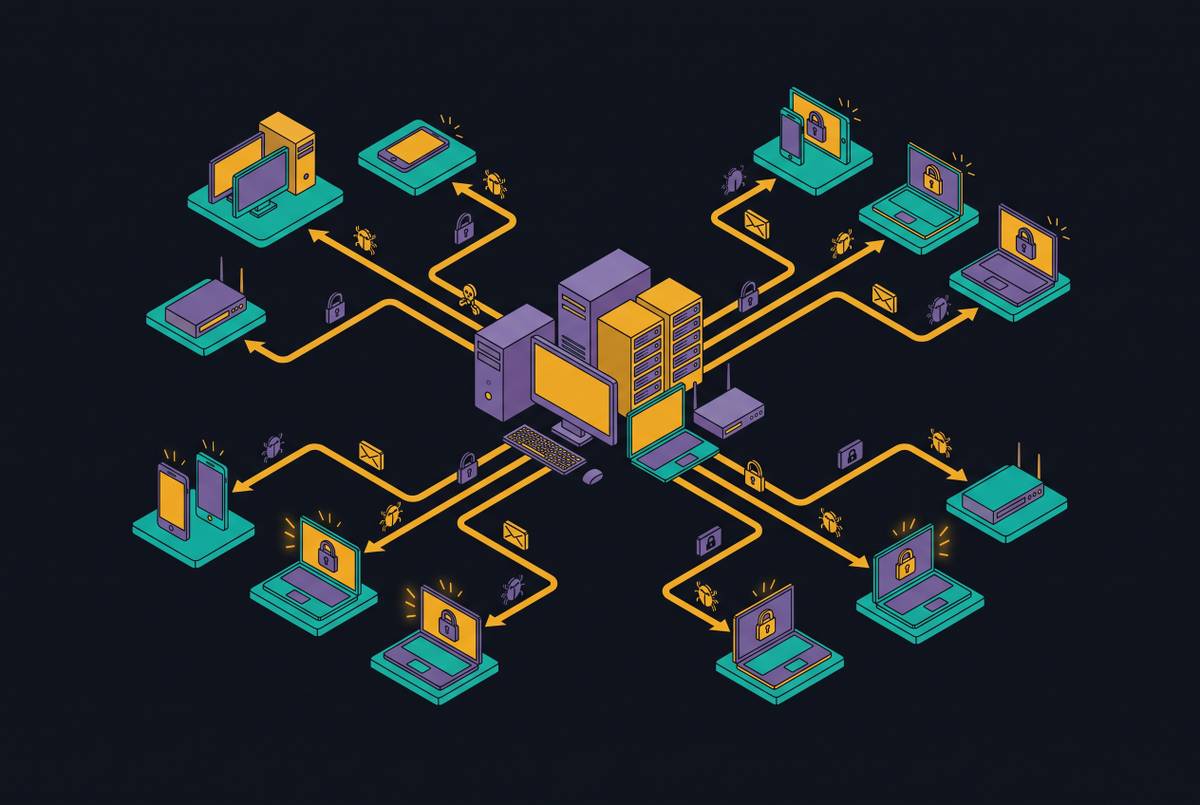
Attackers hide malicious code in trusted software updates.
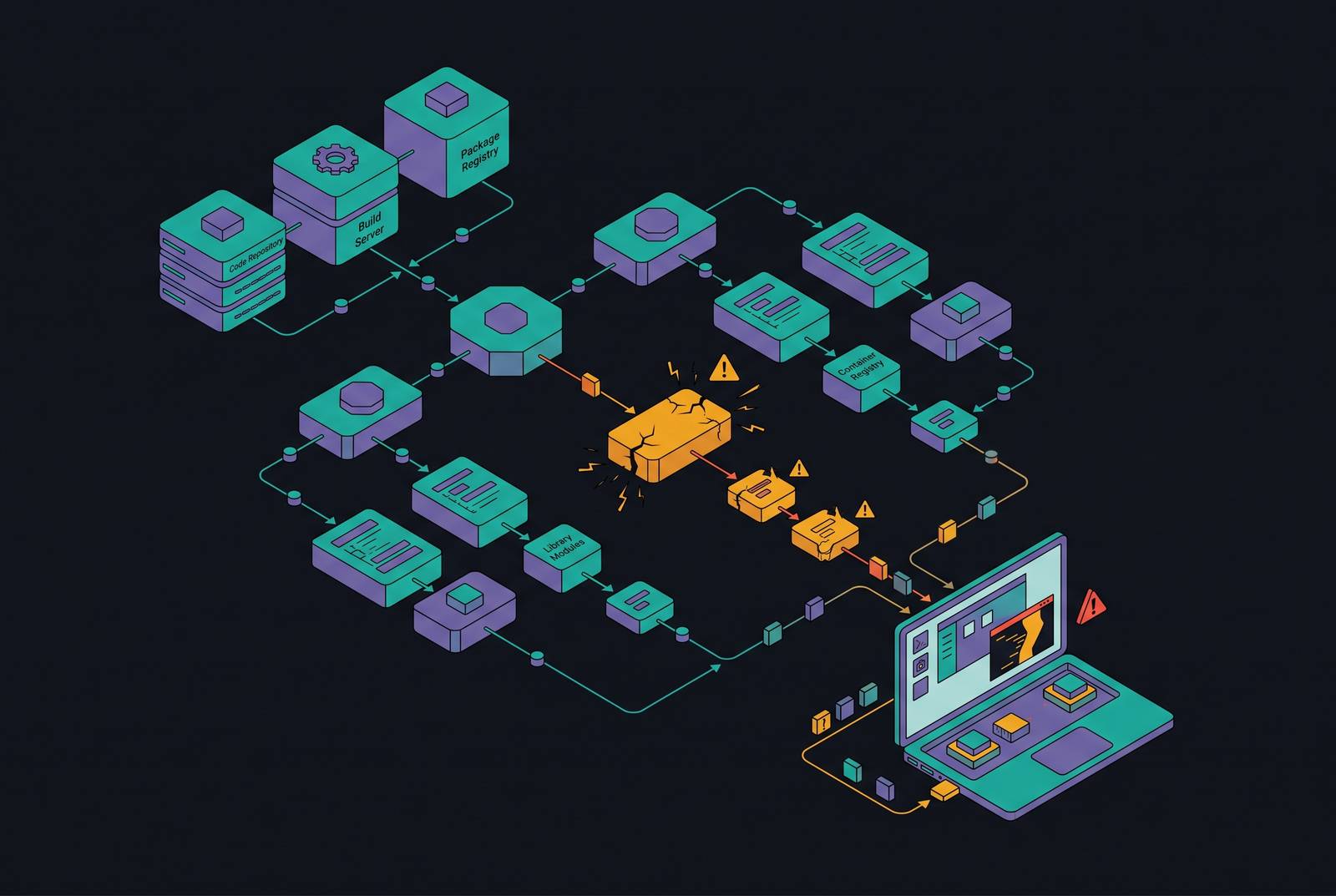
Software supply chain risk at the endpoint level is a problem of misplaced trust. A legitimate update path or signed package can deliver malicious code without looking suspicious. Judge software by its behavior on the device as well as its source, and pair that enforcement with identity protection that stays active without a dedicated security team.
How supply chain attacks reach the endpoint without looking like an attack
A routine software installation can be the whole delivery mechanism. The user installs a dependency, accepts an update, or adds an integration, and the malicious code arrives through an expected channel. There is no malicious attachment to open and no suspicious link to avoid. The vendor can be real, the signing certificate valid, and the distribution infrastructure familiar. Those trust signals explain why the software was allowed in, but they do not establish that it is safe to run.
Microsoft's ChainDrop research shows how little separates installation from execution. The worm ran through a preinstall hook, which lets code run when a package is being installed. That matters because installation itself triggers the attack rather than leaving a separate file for someone to inspect before running it. A normal step in getting work done becomes the point at which malicious behavior starts. The attacker does not need the user to make another bad decision.
This is the central trick of trusted delivery. Defenses are supposed to allow approved software from known sources, and a supply chain compromise turns that permission into a route onto the device. The attack borrows the legitimacy of the channel carrying it. As a result, controls that rely on signatures or source reputation cannot reliably close the gap between approved delivery and safe execution.
What the attack surface actually looks like in 2026
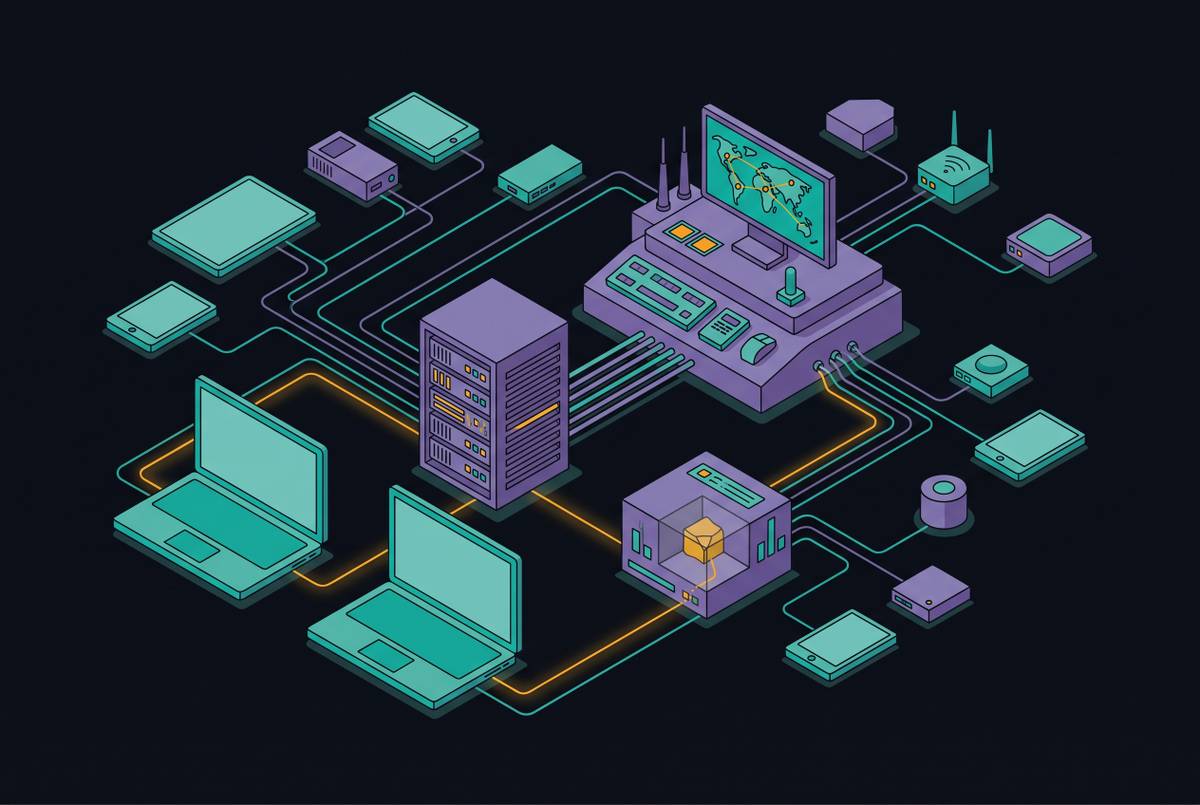
The 2026 attack surface includes far more than a developer downloading a library. AI coding assistants, IDE extensions, SaaS connectors, package registries, and update infrastructure all create routes for upstream code to reach a device. Their common feature is delegated trust, with one tool depending on software or services supplied by someone else. A compromise at that shared source can cascade into many downstream environments. The device receiving the code may belong to a developer, but it may also belong to someone whose job has nothing to do with writing software.
Rubrik Zero Labs' August 2026 threat landscape report documented the Axios npm maintainer account takeover. It exposed a codebase with hundreds of millions of weekly downloads to potential malicious updates. The download count shows how far that account could spread malicious updates, while the number of devices with a confirmed infection remains unknown. Even with that distinction, the case shows the leverage of a single identity compromise.
Microsoft's ChainDrop analysis documented a different expression of the same leverage. The worm spread across more than 400 npm packages from publishers with no ties to one another, including packages tied to major enterprise software ecosystems. It used recovered credentials to authenticate to npm, GitHub, AWS, Kubernetes, and HashiCorp Vault. The package registry was therefore not just a delivery point. Stolen identities gave the worm a way to move beyond the first package and reach other services.
The eScan incident shows why this is not only a package-management problem. Threat actors compromised the endpoint security product's update infrastructure, turning its trusted update server into a malware distribution engine. In that case, a tool intended to protect the device became the route onto it.
Why the delivery mechanism defeats perimeter-focused defenses
Perimeter-focused controls ask useful questions about provenance, including whether software comes from a known vendor, carries a valid signature, and matches an expected hash. A compromised supply chain can pass those checks because the malicious package comes through the official path. The controls have not necessarily failed at the job they were designed to do.
Once that trusted delivery has cleared the perimeter, enforcement depends on assessing what the software is doing. A signature cannot explain why an installer is searching credential files or authenticating to an unexpected service. Endpoint telemetry shows those actions by recording what software does on the device as it runs. This is why the endpoint becomes the critical enforcement point. It can expose the mismatch between a routine installation and the actions that follow it.
Rubrik Zero Labs identified an identity-centric component in roughly two-fifths of the supply chain incidents it analyzed. Those activities included credential harvesting from memory, exfiltration of cloud provider keys, and SSH key theft. Network inspection alone does not show the local memory searches or file access behind that theft. Microsoft's ChainDrop research illustrates the sequence, with the worm searching memory and the filesystem for credentials, authenticating to external services, and propagating before a person could inspect the package. Process spawning, credential file access, and unexpected outbound authentication provide behavioral signals that the delivery channel does not.
Older endpoint tools that check known executables and file signatures have a similar limit. Packages can assemble and execute dynamically, so matching a file against a known threat does not govern everything that follows installation. The enforcement model has to account for actions as well as artifacts. That does not make source checks useless.
Why small businesses without a security team are especially exposed to this specific attack pattern
This attack pattern can reach a small business through its everyday work, even with an ordinary technical setup. An accounting integration can bring outside code and connected accounts into the same workflow. If a dependency runs automatically during installation, malicious code may run at the business without anyone knowingly starting an unfamiliar program. The convenience of the trusted integration is also what makes its downstream behavior easy to overlook. Without a security team, there may be no one routinely looking for that distinction.
The likely damage also goes beyond a visibly broken website or altered page. Credentials can expose hosting accounts, cloud storage, payment processor access, the mail service sending customer receipts, or the database holding the customer list. The package name may mean nothing to the owner, while the stolen access is central to operations. Connected partner relationships can widen that exposure beyond the business itself.
AI tools open another way into this gap as more people use coding assistants for operations and administrative work. An assistant that silently installs a dependency to complete a task can create a supply chain entry point on an endpoint outside the development team. The person using it may see only a completed task, unaware of the software installation. That makes the old assumption that only developers need to think about package risk less useful.
None of this means every small business will be compromised. Being small does little to protect a business from attacks that arrive through software dependencies and trusted connections. Automated execution does not depend on an owner recognizing the package or considering the business a target. The structural disadvantage is having the same need to detect and contain that behavior without staff assigned to watch it. Controls have to fit that operating reality.
What endpoint-level controls actually stop supply chain attacks from becoming breaches
Behavioral endpoint detection and response, or EDR, comes first because it addresses the gap that trusted delivery creates. It watches what processes do, including unusual credential file access, unexpected outbound authentication, and process spawning from a package installer. The goal is to detect and block malicious behavior at execution rather than treat successful installation as a safety verdict. Coverage needs to reach all endpoints running the software, including devices beyond those considered most sensitive.
An EDR alert sitting unread over a weekend night merely records a threat that still requires containment. Managed EDR makes the investment pay off by watching for threats at all times and acting on alerts. For a founder or IT generalist, that distinction matters more than a long feature list. The foundational control is behavioral detection with someone responsible for acting on it.
Identity protection is the second key control because stolen access can let an attacker spread from one device into a wider breach. Multifactor authentication, or MFA, belongs across identity entry points, including administrative accounts, cloud services, and financial systems. It does not stop malicious code from harvesting credentials on the endpoint. Its role is to put another barrier between a stolen credential and access to the account it protects.
Device management and patch discipline come next to lower the risk and shorten the time affected software stays installed. Keeping software inventoried and current gives the business a basis for finding compromised package versions and keeping vulnerable components from lingering. This is an argument to manage software throughout its life on the device, since avoiding updates creates its own exposure. The inventory and patch process support the first two controls by making coverage less dependent on assumptions.
One well-configured EDR deployment that is actually monitored is worth more than three half-implemented products competing for the same alert queue. An integrated platform that brings device management, endpoint security, and identity protection into one console can make that coverage practical for a lean team. Its value is less coordination work and fewer gaps between a signal and the action it needs.
In a supply chain incident, the attacker may have been present for days before detection, so recovery cannot rest on the assumption that the compromise was caught immediately. Immutable, tested offline backups limit the damage between infection and recovery. They do not replace behavioral monitoring or protect an account from stolen access. Their place in the stack is to support recovery after the earlier defenses have not stopped every consequence.
What it looks like to build these controls without a dedicated security team
The controls need to keep working after deployment. Separate tools require someone to configure them, connect them, interpret their alerts, and take action. Without a security team, those responsibilities compete with the work of running the business and keeping IT available. The practical model must remove that dependency rather than quietly assign a second job to the founder. Managed detection and response closes the monitoring gap so that a behavioral signal at 2 a.m. receives a response before Monday morning.
A single console for device management, endpoint security, and identity protection gives the operator a connected view of coverage and policy enforcement. That matters when a security agent is installed but has stopped reporting, or when access changes no longer match device trust. The useful outcome is the ability to identify a gap, establish who owns the fix, and keep the control from remaining broken.
Deployment speed matters too, because the business keeps running software without the planned protection while a long setup is still under way. The model should make coverage and policy enforcement part of deployment. Cyber insurance reinforces the same operational demands through scrutiny of EDR deployment, MFA coverage across all entry points, and documented patch SLAs at renewal. These are the same basic security protections, with a need to show insurers that they are in place.
For a lean organization, the simplest workable answer is an integrated platform backed by continuous response. Continuously enforced means endpoint agents keep reporting, identity protections stay in place, patch commitments are met, and someone acts on alerts. It also means changes to devices and accounts do not quietly undo the original deployment. The business needs controls that keep operating after installation without requiring a security expert to watch a dashboard full-time.