Endpoint Consolidation Business Case for the Board
Consolidating endpoints cuts breach costs millions by closing security gaps tool sprawl creates.
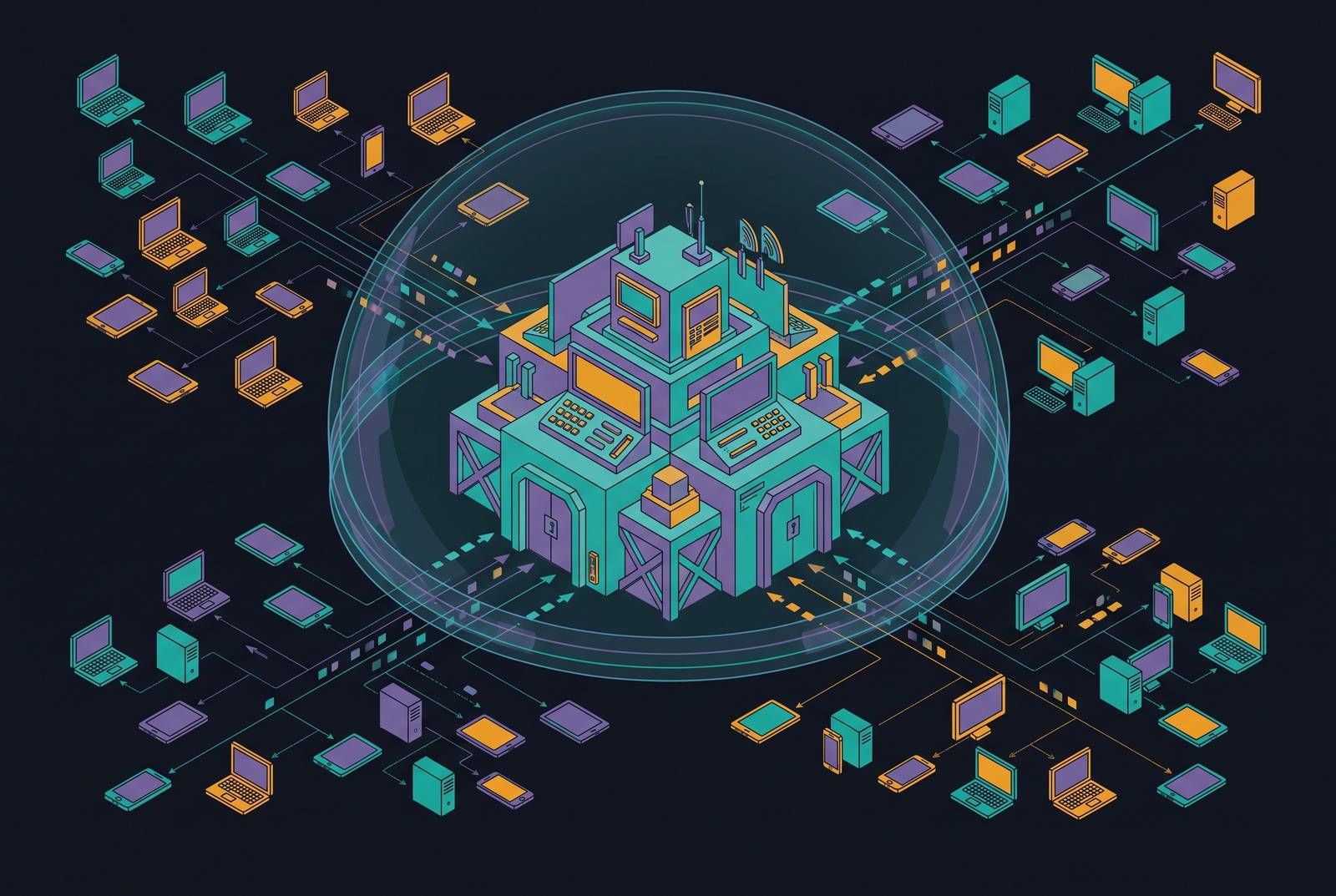
Sprawl costs money the way a leaky roof does: quietly, then all at once, and always more than the fix would have cost. Most boards haven't run the numbers that would tell them this, so they treat consolidation as a nice-to-have instead of the cheaper option it actually is. That's backwards, and the math to prove it is sitting in their own budget lines, their insurance renewal, and their last incident report.
What the threat environment actually looks like for a company without a dedicated security team
Smaller organizations aren't a lesser target. They're the preferred one. The Verizon 2025 Data Breach Investigations Report, drawing on tens of thousands of incidents and thousands of confirmed breaches, found SMBs absorbed nearly four times the attack volume of larger organizations, and ransomware showed up in the vast majority of breaches affecting them, versus a significantly lower share at large enterprises. Size isn't a reason to be overlooked. It's the reason to be chosen, because a smaller company usually means fewer controls and no one watching full-time.
Speed compounds the exposure. CrowdStrike's 2025 Global Threat Report put average time from initial access to lateral movement at roughly 48 minutes. No generalist IT person checking a console between tickets is going to catch that window, no matter how conscientious they are. Attackers move at machine speed now, and a defense built on someone glancing at a dashboard once an hour was never built to match it.
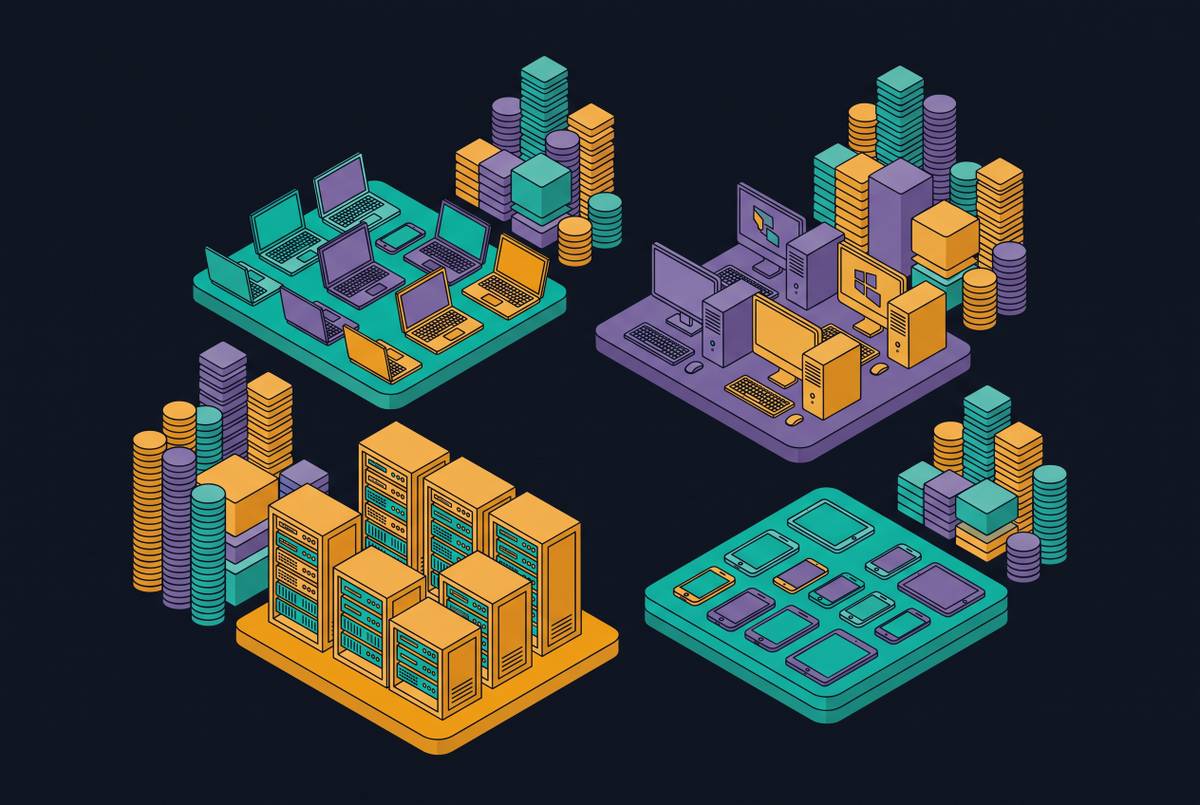
The entry points are unglamorous: corporate servers, employee laptops, cloud servers. That's most of the exposure surface, not a slice of it, and remote and hybrid staffing widens it further, organizations running predominantly remote teams see more than twice the phishing volume of primarily in-office companies. Add tens of thousands of new CVEs reported in 2024, and a lean IT team triaging that list by hand isn't managing risk. It's guessing which unpatched hole gets hit first.
The real cost of a breach for a company that can't absorb one
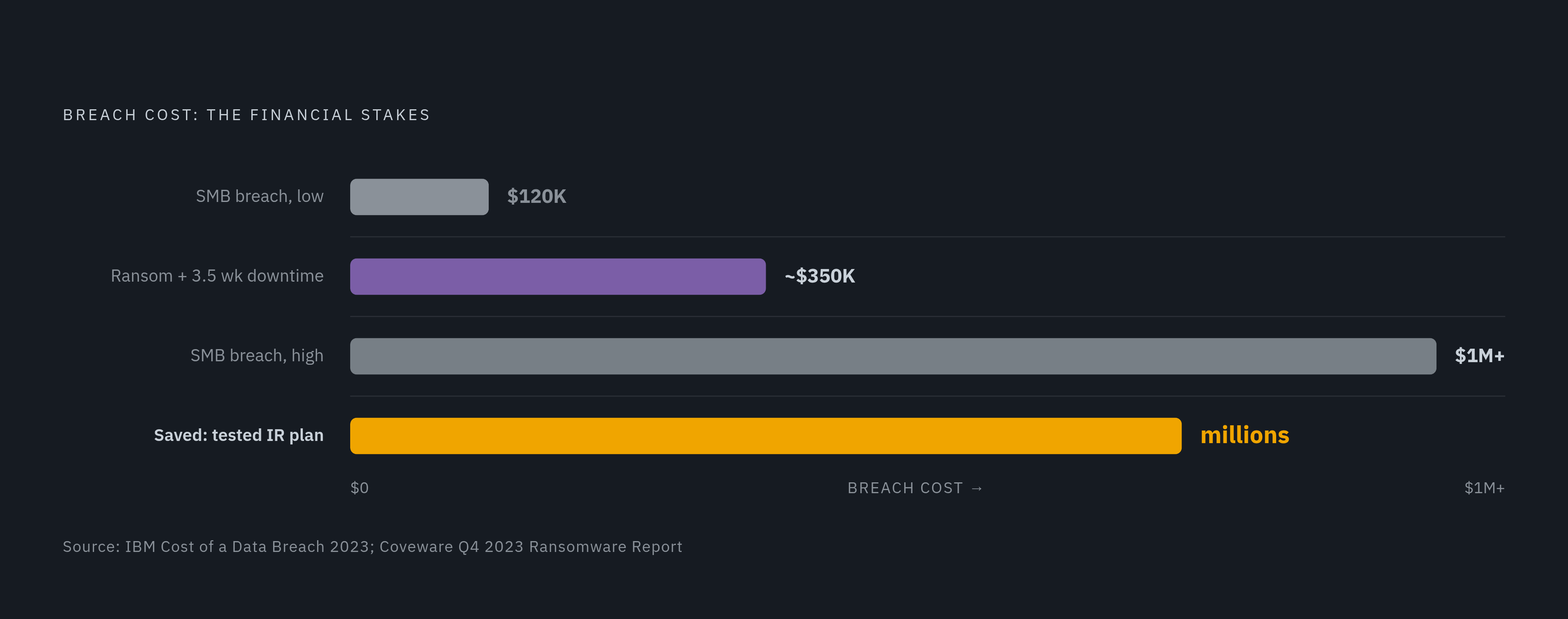
Verizon's 2024 DBIR puts average breach cost for a small business between roughly $120,000 and well into the millions, depending on severity. That range belongs in front of every board that hasn't run this exercise, because it's not an insurance abstraction—it's a number that comes out of payroll, legal fees, and lost contracts.
Ransomware sits on top of that as its own category, not a subset of it. Industry data puts median ransom payments in the six-figure range, with average downtime from ransomware incidents running around three and a half weeks. Three and a half weeks without operational systems isn't a bad quarter. For most SMBs it's close to company-ending, and the National Cybersecurity Institute's finding that more than 60% of SMBs that suffer a cyberattack go out of business afterward isn't a scare statistic. It's a base rate.
Compliance fines stack on top of that again, and the insurance market that used to cushion this risk is tightening rather than loosening. Carriers underwrite on demonstrable controls now, not good intentions: no incident response plan, no favorable premium. That's the baseline going forward, not a temporary squeeze.
One figure should reframe the whole conversation. IBM's 2025 Cost of a Data Breach Report found organizations with a tested incident response plan cut breach costs by millions of dollars on average compared to those without one. That's the entire financial argument for readiness, in one number.
How tool sprawl actively makes security worse and costs more at the same time
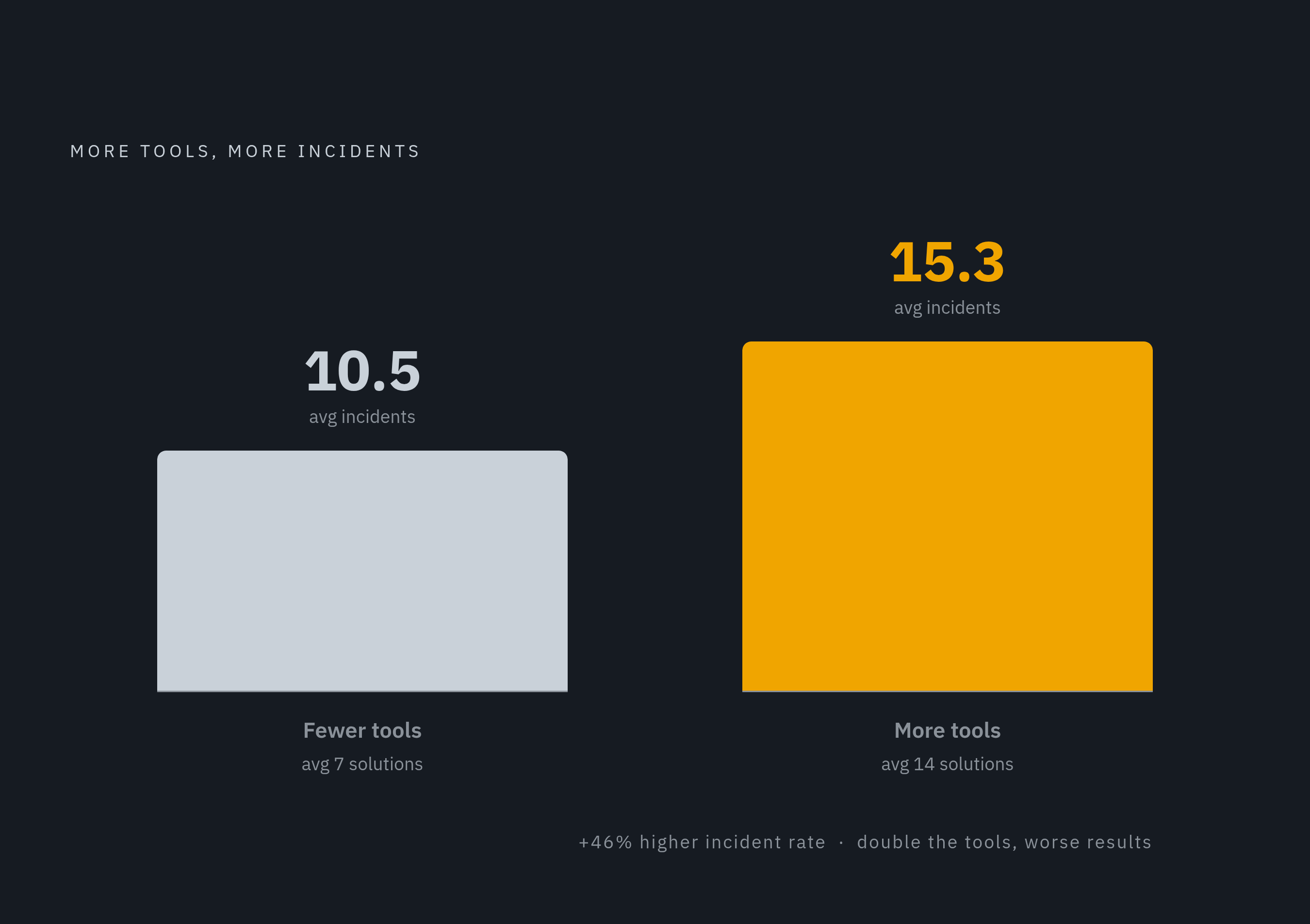
More tools do not mean more protection, and every CFO in the room should sit with that directly. Microsoft research cited in Blackpoint Cyber's 2025 analysis found 35% of SecOps teams increased their tool count over the prior year, running an average of 14 different solutions, and the ones running more tools averaged 15.3 security incidents against 10.5 for organizations running fewer. More spend, worse outcomes. That correlation isn't a coincidence, it's what happens structurally when a stack gets assembled by accident instead of by design.
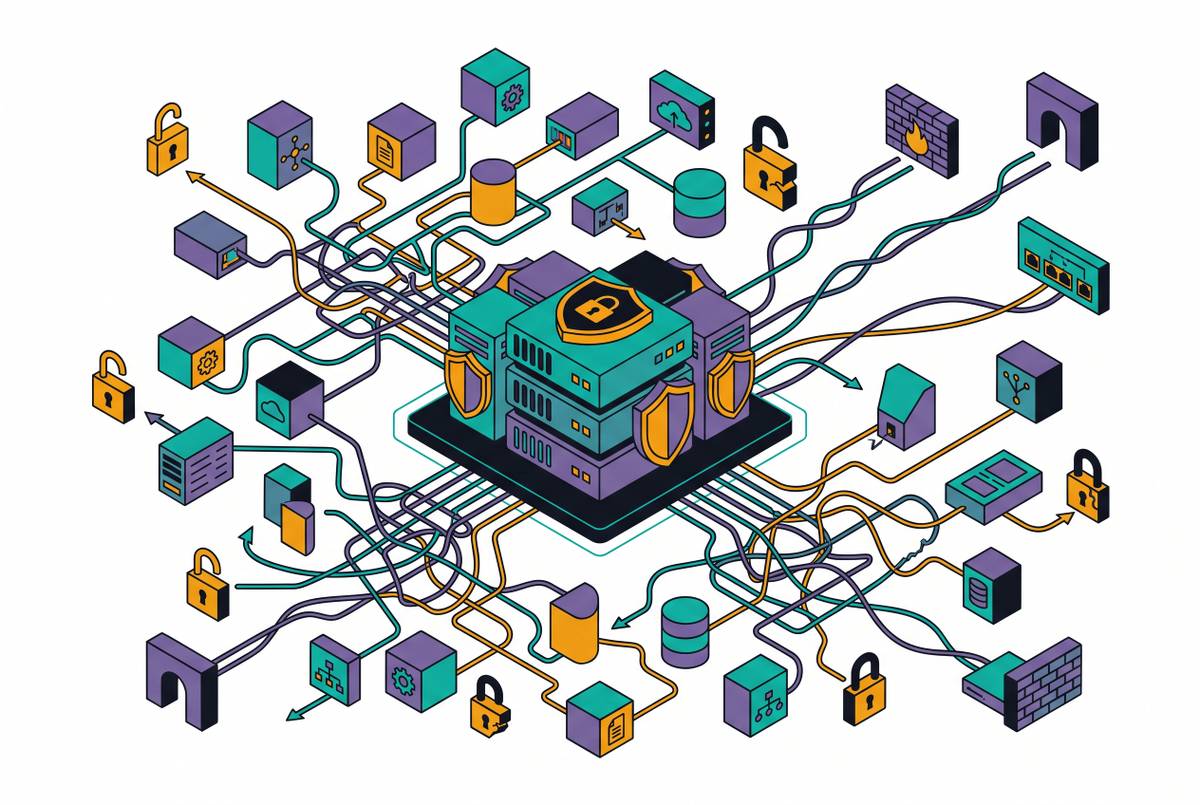
Nobody designs a fragmented stack on purpose. It accretes: an endpoint tool bought two years ago, an identity product added after an audit finding, a network monitoring tool a departed IT director happened to like. Zip, for instance, is an all-in-one security platform built specifically for lean teams that never had the headcount to manage a stack assembled this way. The result is overlapping coverage in some corners and invisible gaps in others, because no single console sees the whole attack chain. A multi-stage intrusion moving from endpoint to identity to network inside an hour walks straight through the seams between tools that were never built to talk to each other.
Old tools don't disappear quietly either. They sit there holding live permissions and credentials long after anyone's watching them, shelfware with a working login and no one checking it. Alert fatigue is the daily version of the same failure. One managed endpoint retail client went from 1,500 monthly endpoint alerts down to under 120 actionable cases after consolidating, reclaiming roughly 30 analyst hours a week that had been spent chasing noise instead of catching signal.
Policy drift adds a quieter cost. Configure the same rule across four consoles and eventually one of them will be wrong, because someone updated three and forgot the fourth. Gartner's 2024 data found IT teams spending 30 to 40% of their time on reactive troubleshooting instead of strategic work, a direct tax of running too many disconnected systems. The fleet keeps growing too: organizations now manage dramatically more endpoints than before the pandemic, with 81% reporting a spike in incidents tied to unmanaged devices. Fragmentation doesn't stay flat, it compounds as the fleet grows, and the redundant licensing across overlapping categories shows up as a smaller raw dollar figure for an SMB than for an enterprise, but a far larger share of a leaner IT budget.
What consolidation actually delivers in operational and financial terms
Consolidation isn't a tidiness project. It shuts down the three failure modes of sprawl at once: visibility gaps close, policy drift stops because there's one place to set the rule, and the overhead of managing a dozen consoles disappears.
Dwell time is the number that converts directly into breach cost. Mandiant's M-Trends 2026 report found global median dwell time at 14 days, and every one of those days is a window where damage compounds. A unified platform with automated detection shrinks that window because detection stops depending on a human noticing an anomaly buried in a fourth console. Patch latency tells the same story: Industry research found organizations take an average of 55 days to remediate a critical vulnerability once a patch is available. Automated, consolidated patch management doesn't just shrink that window, it removes it structurally, because patching becomes a fleet-wide policy instead of a task sitting on someone's to-do list.
The financial case holds up under scrutiny. A Forrester Total Economic Impact study of consolidated endpoint management found 442% ROI over three years, with payback in under six months. Industry data shows automated isolation of ransomware through consolidated endpoint protection can cut recovery time by 40 to 60% compared to tools-only setups, the difference between an incident contained in one department and a site-wide shutdown. Automation adds another layer to the financial case: organizations that invest in streamlined, automated security operations consistently report meaningful reductions in both breach costs and breach lifecycle compared to those relying on manual processes.
This isn't a fringe bet anymore. Gartner projects 30% of enterprise customers will consolidate EDR, endpoint prevention, and identity threat detection onto a single vendor by 2038, up from a small minority in 2024. The market has made its call already. The only open question is how far behind it any individual board wants to fall.
How to build the consolidation business case in terms the board will recognize
Frame it the way any board frames a capital decision: current-state cost, future-state cost, and the risk-adjusted cost of doing nothing.
Start the current-state inventory with every line item that already exists: licensing across all active tools, including the overlapping ones nobody's audited lately, IT staff hours consumed by tool management and alert triage priced at loaded hourly rate rather than guessed at, the direction of the cyber insurance premium and any gaps the underwriter has flagged, and the audit prep time and fines sitting in the compliance column.
Then price the risk of doing nothing. Apply the Verizon 2024 DBIR breach cost range, $120,000 to over $1 million, against actual exposure. The ITRC's 2025 Business Impact Report found 81% of small businesses reported a breach or data exposure in the prior 12 months, which moves this out of "unlikely tail risk" and into near-term financial planning, sitting in the same bucket as a lease renewal or an insurance rate hike.
Against that backdrop, a consolidated platform usually reads as a reduction rather than a new expense line: it replaces several licensing contracts and cuts the integration overhead of stitching four vendors together. For a board weighing whether to build an internal security function instead, the staffing math settles it fast. Even minimal 24/7 monitoring built in-house requires multiple full-time analysts, with total compensation running well into seven figures annually, and for a lean team that means managed and consolidated isn't the cheaper option among several. It's the only realistic one. Add audit-ready reporting the platform produces on its own, removing manual prep most SMBs currently absorb before every compliance review, and a deployment measured in weeks instead of months, and the payback period the board is being asked to approve gets a lot shorter than the alternative.
What to look for in a consolidated endpoint security platform when you have no internal security team
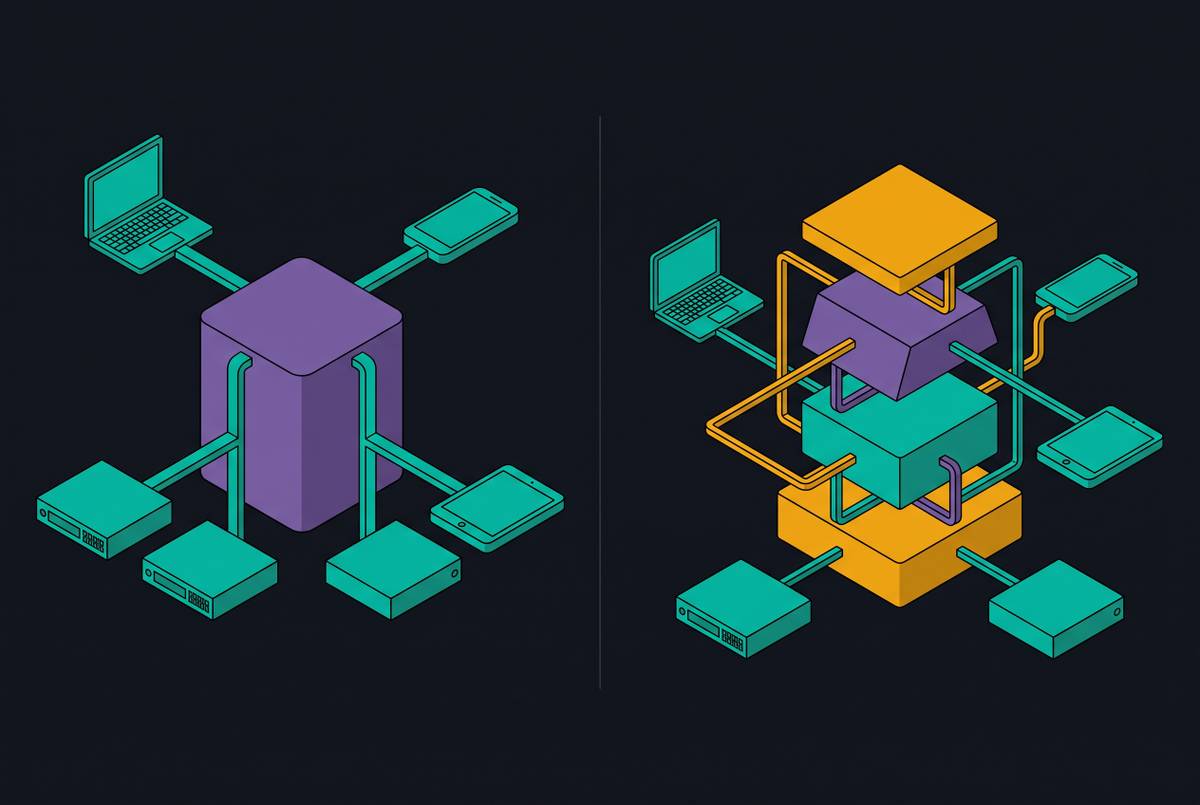
Unified means one agent, one console, covering device management, endpoint detection and response, identity protection, and compliance reporting together. Four tools wired together through APIs is not consolidation, it's sprawl with a shared login page, and any vendor pitching it that way should get pushed on the distinction until the seams show.
Deployment speed matters more than it sounds like it should. A platform needing months of professional services to configure leaves the organization exposed during the entire setup window, which defeats the point of buying it. A lean IT team should treat deployment timelines measured in many months as a warning sign, not a normal expectation.
Automated response needs to act, not just alert. Look for automated containment, process termination, and rollback built into the platform, not a notification that needs a human awake at 2 a.m. to do anything useful with it. Patch management should work the same way: the platform prioritizes and pushes patches across the fleet on its own, instead of handing a generalist IT staffer a CVE list and hoping they guess right. Compliance reporting aligned to frameworks like SOC 2, HIPAA, NIST, or PCI DSS should come out of the platform as a built-in output, not a separate engagement billed by the hour.
The warning signs repeat across vendors: a separate console for device management sitting next to a separate console for threat detection, identity protection sold as a bolt-on module from an entirely different company, compliance reports that need exporting to a third-party tool before anyone can read them. Each of those is sprawl wearing a single price tag. The board's business case should name the specification directly: one deployment, one console, covering device management, endpoint security, identity protection, and compliance automation together, not a vague aspiration toward "better tools."
The questions a board should ask before approving or deferring this decision
Start with the inventory question. Can the organization produce a current-state cost tally for its endpoint tools today, licensing, integration, and staff time combined, or is that number still scattered across five different budget owners?
Then get concrete about detection. Does anyone know the median time-to-detect if a device on the network is compromised right now? Has the cyber insurer flagged control gaps in the past 12 months, and does the board know which specific controls move the premium? Ask the uncomfortable one directly: if a ransomware incident started tonight, who finds out first, someone inside the company or an outside party. Too often, organizations learn about their own breaches from an external source rather than their own tools, a damning pattern for any board to sit with.
Two more questions close the loop. What's the current patch latency for critical vulnerabilities, and how does it compare against the roughly 55-day industry average Verizon reported? And is MFA deployment actually comprehensive, or partial? The ITRC's 2025 Business Impact Report found MFA implementation among SMBs fell from roughly a third in 2024 to just over a quarter in 2025, moving the wrong direction relative to where the threat data is heading. That's a gap a board can verify this quarter and close before the next one.
Deferring this decision has a cost of its own. Nothing here is speculative: it's built from documented breach costs, measured dwell times, and licensing overhead that shows up on the books whether anyone looks at it or not. The board is already paying for fragmentation. The only open question is whether to keep paying for it quietly or make the number visible and fix it.