Hidden Integration Costs of Point Security Solutions
Vendors hide real costs in integration labor, redundant licenses, and modular pricing tiers.
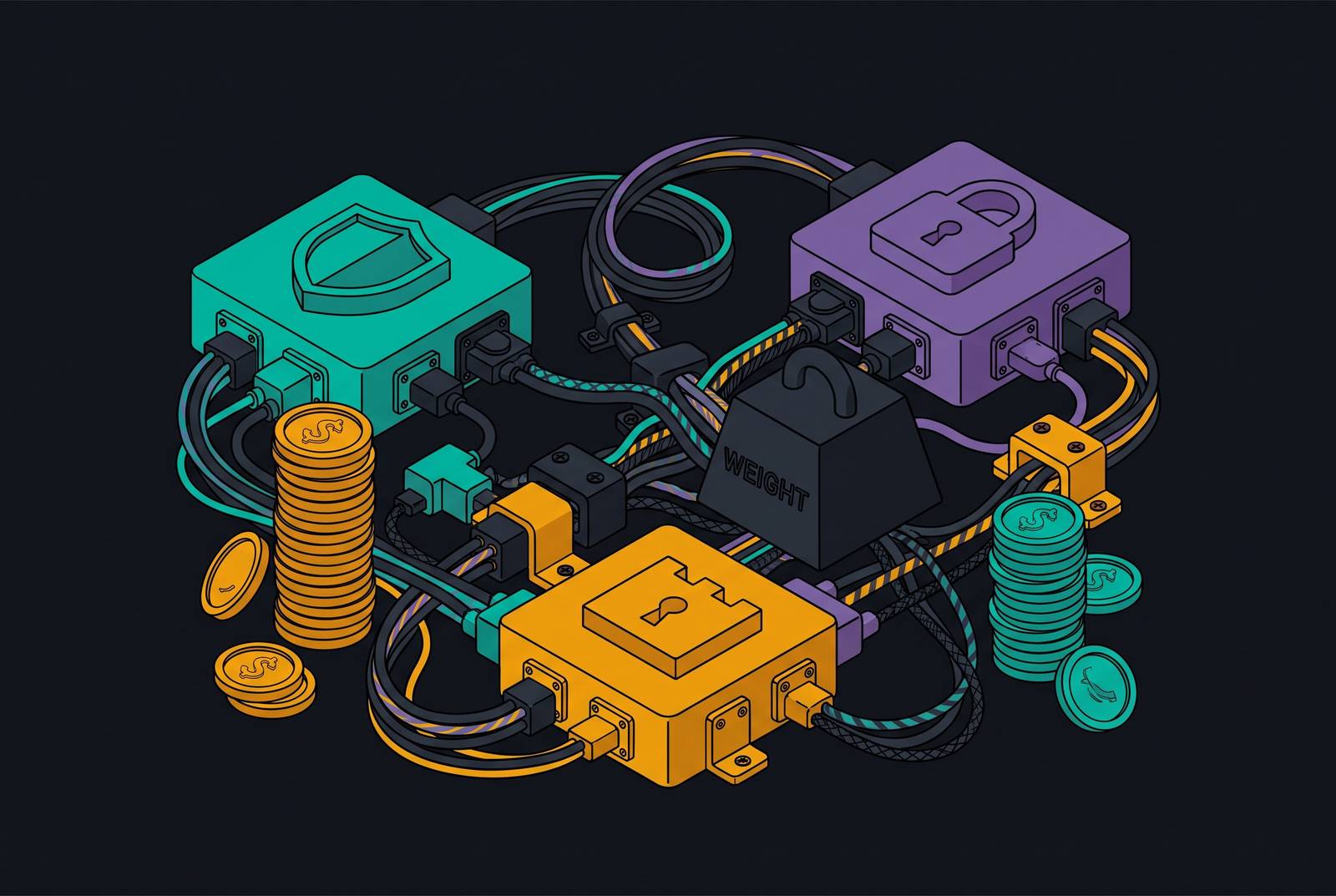
The license fee on a security tool is the smallest number in the deal. What decides the real cost is everything that happens after signature: integration labor, staffing hours, alert volume, compliance exposure, and the slow buildup of operational drag no vendor puts in a quote. Most buyers compare license prices side by side and call it due diligence. It isn't. Consolidation consistently reduces total cost compared to unchecked point-solution sprawl, and the industry's slow shift toward it is a two-decade correction, not a passing trend.
How many tools the average organization is already running, and what that baseline costs
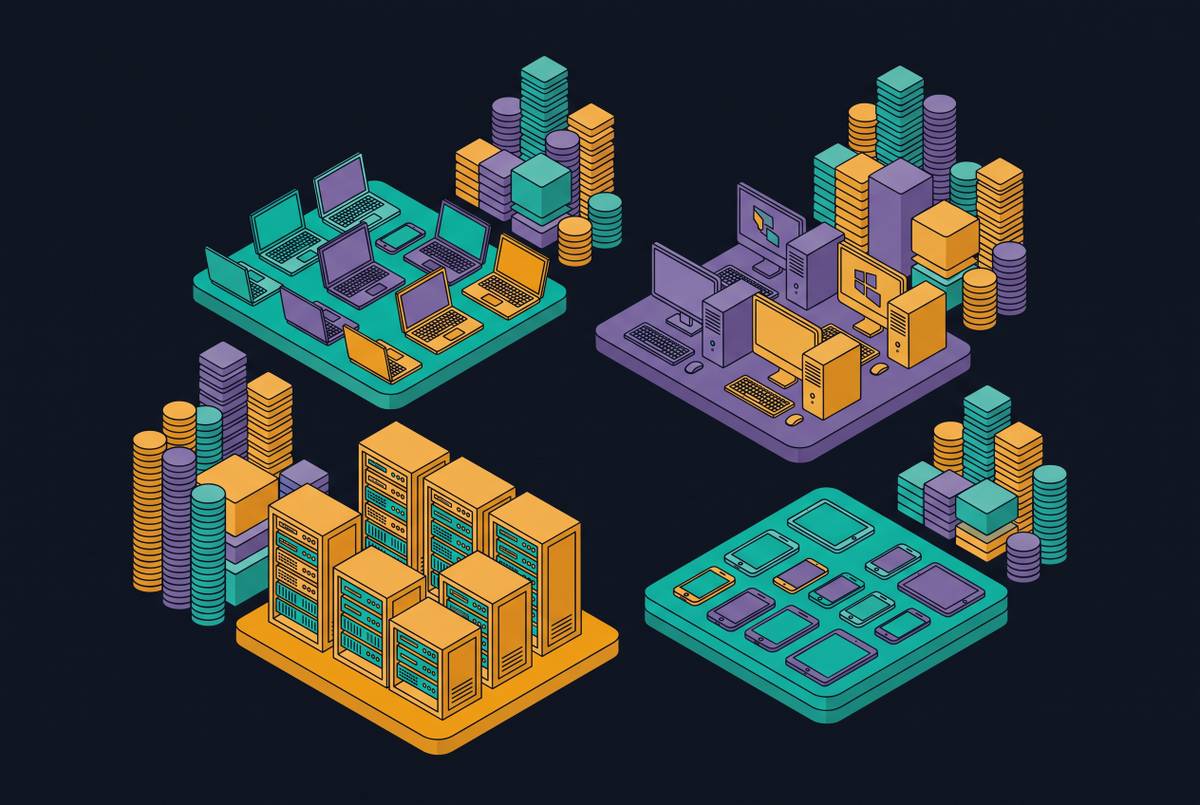
Enterprises typically run somewhere between 50 and 80 security tools at once. CybelAngel puts the average closer to 45, drawn from a market that now counts more than 3,000 security vendors. Either number describes the same condition: sprawl.
Each tool comes with its own license terms, renewal date, configuration quirks, and a stack of documentation nobody reads until something breaks. Managing 50 vendors doesn't mean managing one problem 50 times over. It means managing 50 different problems, each with its own login and its own way of failing.
Redundant licensing follows from that sprawl, and it's the part most budget reviews miss entirely. Enterprises routinely carry $200,000 to $500,000 in overlapping annual licenses across SIEM, SOAR, and threat intelligence tools that duplicate each other's coverage, and nobody notices until someone finally asks why three products are doing the same job. Benchmarks drawn from more than 780 contracts negotiated in 2024 and 2025 put typical annual cybersecurity software spend, before any optimization, at $3.1 million to $7.5 million for a 1,000-user enterprise. Consolidation and renegotiation bring that down to $2.2 million to $5.2 million, a savings range of $900,000 to $2.3 million a year. That's a second hire, or a third, sitting unused inside redundant contracts.
Gartner found that 75% of organizations were actively pursuing vendor consolidation, up from just 29% in 2020. Charles Henderson, former head of IBM Security's X-Force unit, put the underlying issue plainly: "If they perform in isolation, the time invested, the money invested in them, it's just not worth it." He's right, and every tool sitting in a stack today proves it again each week it runs without talking to the others.
What integration actually costs once a new tool has to connect to everything else
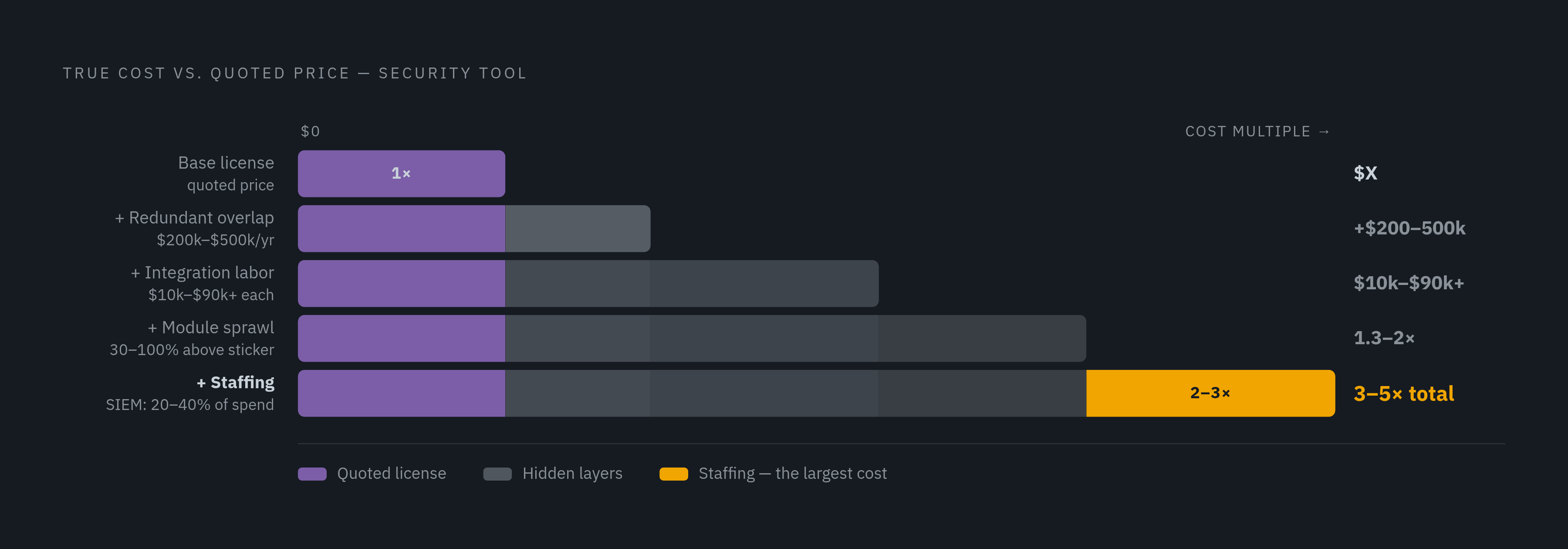
Integration labor is the cost nobody quotes and everybody pays. It shows up after the contract is signed, when someone on staff, or a consultant billing by the hour, has to make the new tool actually talk to the tools already running.
The breakdown by complexity is worth knowing before signing anything. A simple integration, one using standard APIs against small systems, runs $10,000 to $30,000. A moderate integration, the kind that aggregates logs or connects into an identity and access management system, runs $30,000 to $90,000. A complex integration, involving legacy systems, custom connectors, or a multi-cloud environment, runs $90,000 or more. Those are per-integration figures, and an organization adding several tools in a single year multiplies accordingly. That multiplication almost never shows up at budgeting time, which is exactly why the estimate on the signing table is usually wrong.
Integration narrows future choices, too. Once a security tool is wired into the stack, compatibility requirements and ongoing maintenance start constraining what else can be added or changed later: a kind of lock-in that never appears on any invoice. And there's a sharper irony underneath it: every new integration point is also a new failure point or exploit path. Security infrastructure itself has become a prime target, precisely because so much of it is now wired together.
The CrowdStrike outage in July 2024 is the clearest case study available. A faulty Falcon content configuration update triggered crashes in kernel-level code, causing operational disruption across enterprises that had no hand in the mistake at all. The aftermath pushed many organizations toward slower, staged rollout processes for future updates: a more cautious approach that also happens to cost more. Caution has a price tag, and it gets added to total cost of ownership whether or not anyone budgeted for it.
How modular pricing structures ensure the base price is never the final price
Point solutions get sold in modules almost without exception. The base tier covers the minimum viable version of the product; everything that makes the tool actually useful lives behind an upgrade. That's not an accident of product design. It's the business model, and it's worth naming as such instead of treating each upgrade prompt as an isolated decision.
CrowdStrike's self-serve tiers run $59.99 to $184.99 per device per year on the sticker. But once endpoint detection and response, managed service, and add-on modules get folded in, fully loaded per-endpoint cost lands most mid-market teams at $200 to $400 per endpoint per year. Available pricing analysis attributes the gap almost entirely to module sprawl, with quotes routinely landing 30 to 100% above the base sticker price once real usage gets counted.
Proofpoint shows the same pattern in a different product line. Essentials-tier email security runs roughly $2 to $5 per user per month for basic filtering. Mid-tier and enterprise bundles, the ones with advanced threat protection, data loss prevention, and archiving, run $25 to $70 per user per year. Full enterprise suites with insider threat management and compliance features exceed $100,000 annually. The Targeted Attack Protection add-on alone costs roughly $20 to $35 per user per year, stacked on top of base email licensing. Archiving, advanced analytics, and managed services are separate line items again, each one a small tax nobody sees coming until renewal.
Security awareness training runs the same play. Core platforms cost $12 to $36 per user per year for most small and midsize businesses in 2025, but compliance content libraries for HIPAA or PCI, single sign-on and SCIM integrations, AI-driven coaching, and per-seat contract minimums push the real number well past the headline rate.
Underneath all of it sits what amounts to a fear premium: vendors mark up list prices because buyers perceive high switching costs, incident risk, and regulatory exposure. Tell a procurement team a feature is "compliance-mandated," and the price inflates because the buyer believes there's no alternative. One analysis found companies spending $150,000 to $500,000 annually on a single point solution once the full module set gets counted. That's one tool. Multiply by the 50 to 80 tools an average enterprise runs, and the arithmetic stops looking like a rounding error. It starts looking like a second budget hiding inside the first.
The staffing math that vendors never put in their proposals
Software doesn't run itself. Every tool needs someone to configure it, tune its alerts, manage its renewals, and interpret what it spits out, and vendors sell the software, not the headcount required to operate it. This is the gap that sinks most cost estimates before the ink dries.
SIEM platforms make the pattern easiest to see. For enterprise SIEMs generally, staffing costs run two to three times the license fee. For Elastic Security specifically, UnderDefense's 2025 analysis found the license fee accounts for just 20 to 40 percent of actual total spend, meaning the bulk of the real cost is people, not software.
The ingestion problem makes the staffing burden worse, not better, as the tool sees more use. A single misconfigured firewall, a newly deployed endpoint agent, or a routine Microsoft 365 audit policy change can double daily log ingestion overnight. A 200-person company running standard M365, firewall, and endpoint logging already generates roughly 20 to 40 gigabytes of log data per day, and someone has to watch it, tune it, and decide what actually matters.
The global talent pool isn't close to sufficient for this work, and pretending otherwise is how staffing budgets get built on fantasy. Industry workforce research has found a worldwide deficit of millions of cybersecurity professionals. A follow-up 2025 ISC2 study, based on thousands of respondents surveyed that July and August, found that the vast majority reported at least one skills gap on their team, and many saying they'd experienced a significant cybersecurity event tied directly to a shortage of skilled staff.
For organizations without a dedicated security team, none of this expertise comes bundled with the software. The IT generalist or ops lead who ends up running the stack is doing it on top of an actual job, and the learning curve on each new tool stacks on top of the last one instead of replacing it.
What fragmented alert outputs do to the people responsible for acting on them
Organizations manage an average of 10.9 separate security consoles, according to Microsoft/Omdia 2026 data. Sixty-nine percent deploy 10 or more detection tools, and 39% run 20 or more, per Vectra AI research. Each console has its own login, its own dashboard layout, its own alert logic, and none of them were built to talk to each other.
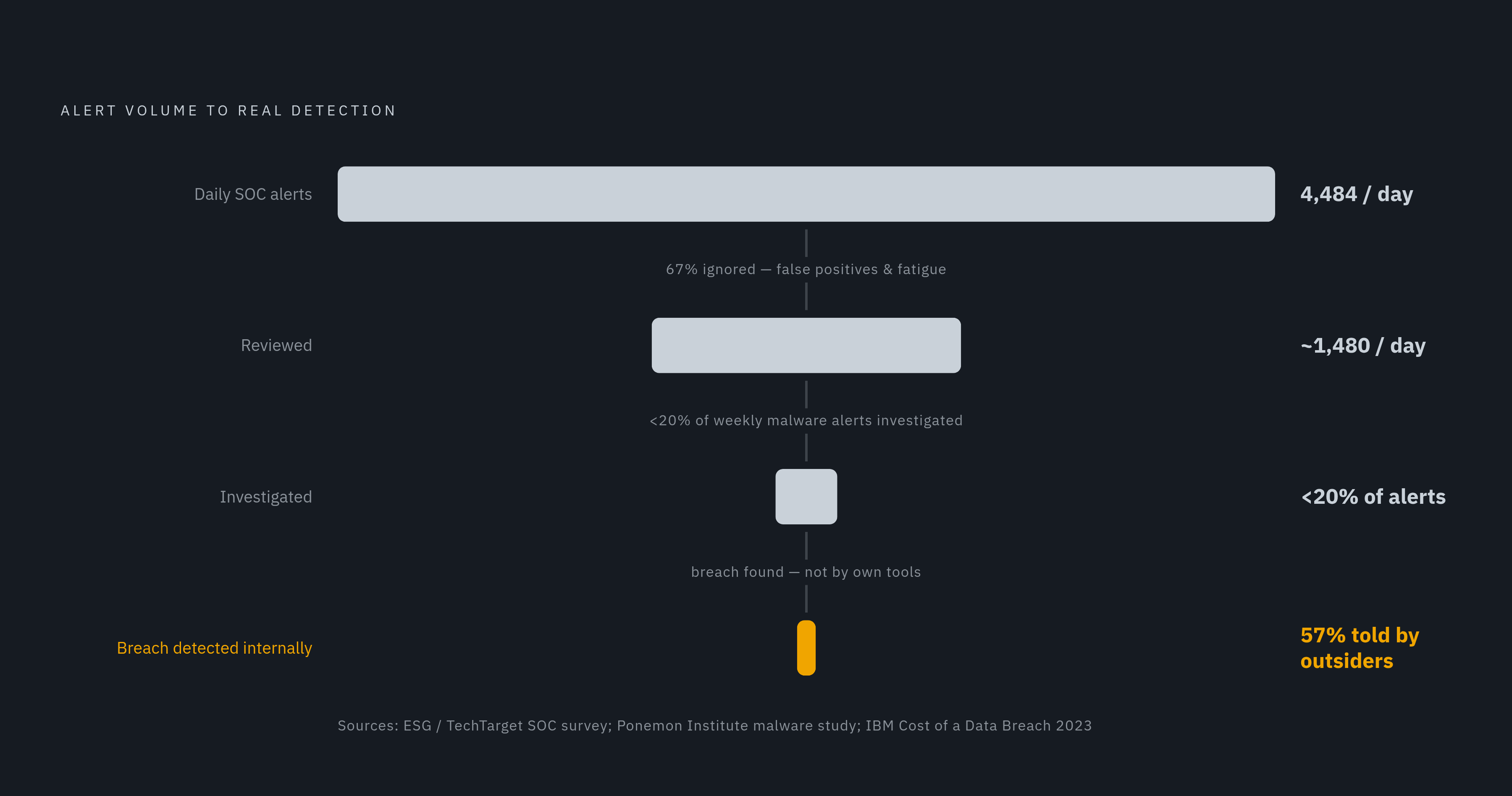
That volume is not something a human being can manage by checking screens one at a time. CybelAngel research puts the average SOC team's daily alert load at 4,484, with 67% of those ignored because of false positives and plain fatigue. On a weekly basis, the average organization receives roughly 17,000 malware alerts, and ISACA's 2025 analysis found fewer than 20 percent are ever investigated. More than 30% of IT professionals admit, in that same ISACA research, to ignoring alerts outright because the false-positive rate has worn down their trust in the system.
The structural cause sits underneath all of it: different vendors build on incompatible data formats and APIs, so threat intelligence generated by one tool frequently fails to reach the tool actually positioned to act on it. That's not a training gap or a staffing shortfall dressed up in different clothes. It's an architecture problem, and no amount of headcount fixes it.
The consequence shows up in how organizations learn about their own breaches. CybelAngel's 2026 guide found that in 2024, 57% of organizations found out about a breach from an external source rather than from any of their own internal tools. That's most of the industry finding out about its own incidents secondhand, from a journalist, a customer, or a law enforcement notice, not from the stack it paid millions to build.
For a lean team, the math is brutal. A generalist watching 10 consoles and hundreds of daily alerts across tools that don't talk to each other has no realistic way to know which alert matters most. The alert burden itself becomes a cost, separate from and stacked on top of whatever the tools cost to license.
How slow detection translates into breach costs that dwarf any licensing savings
Alert fatigue doesn't just waste time. It extends the window an attacker gets to operate inside a network undetected. Google Cloud Security's M-Trends 2025 report found a median of 11 days between initial access and detection: 11 days to move laterally, escalate privileges, and stage data for exfiltration, while the alert pointing at any of it sits buried in a queue of 4,484.
IBM's 2025 Cost of a Data Breach Report puts the fuller picture at 241 days on average to identify and contain a breach: 181 days to detect it, and another 60 to actually contain it once found. Organizations that lack integrated response tools suffer close to one additional breach per year on average, and pay $204,000 more per incident, according to Microsoft Purview research.
The number that puts all of this in perspective is the average breach cost itself: $4.88 million, per IBM's 2025 report. Set against that figure, even the highest integration and staffing costs described above look almost reasonable, which is exactly the point most procurement conversations miss. Underinvesting in detection to save on integration labor is a false economy on a scale that never enters the room, because procurement negotiates a license fee while the real exposure sits eight figures away in an incident nobody's modeled yet.
Some of the tools bought to reduce risk introduce new regulatory exposure instead. A behavior analytics platform can create GDPR problems of its own; a firewall's decryption capability can surface sensitive user data it was never meant to expose. Adding tools does not automatically reduce regulatory risk, and in some configurations it increases it. An organization buying point solutions to shrink its risk can simultaneously widen its detection window, its compliance surface, its attack surface through every new integration point, and its day-to-day operational burden, none of which appear anywhere in the original procurement conversation.
What consolidated platforms actually change about the cost structure
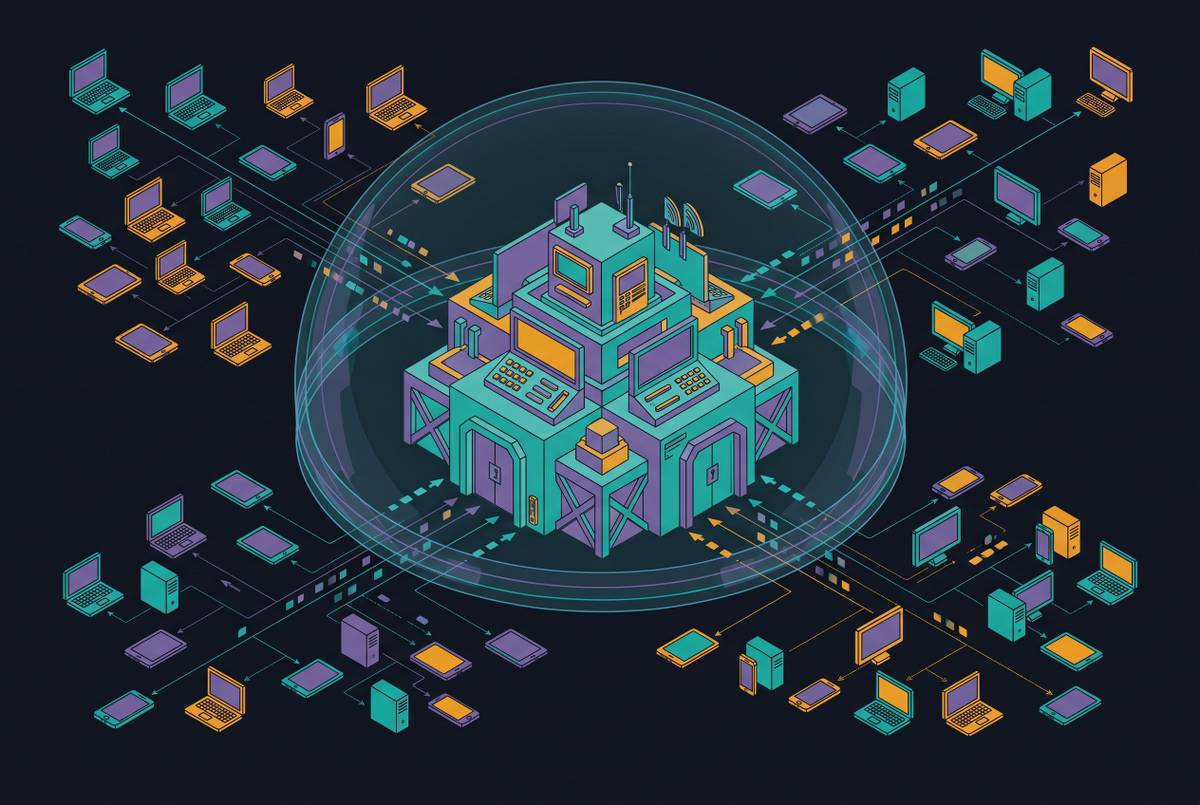
Consolidation is not a nice-to-have. It attacks the cost problem from several directions at once: fewer licenses to track, fewer integrations to maintain, fewer consoles to check, fewer alert streams to reconcile by hand.
The operational math is straightforward, once you actually run it. Fifty vendor relationships mean 50 license renewals, 50 update cycles, 50 configuration sets to keep current. Consolidating collapses that overhead into a single relationship, with one support line and one roadmap to track instead of fifty.
The detection math changes too, and this is the part that matters most. A platform that shares data natively across device management, identity, and endpoint protection doesn't depend on integrations that can fail, lag, or spit out incompatible log formats. Correlation happens inside one data model instead of across a patchwork of connectors, which is exactly the failure point described earlier as the structural cause of missed alerts.
For organizations without a dedicated security team, the staffing math shifts too. Instead of needing working knowledge of a dozen separate tools, a generalist needs to learn one set of workflows, once. Platforms built specifically for lean teams, ones combining device management, endpoint security, identity protection, and compliance automation into a single product, remove exactly the integration labor, context-switching, and vendor-management overhead documented throughout this piece.
Deployment speed matters here too. A platform that goes live in weeks rather than months turns integration labor into a one-time cost, paid once at a fraction of the complexity of connecting a dozen separate tools, rather than a recurring tax every time the stack grows. The 75% of organizations actively pursuing consolidation as of 2024 aren't following a trend. They're reaching the same conclusion after living with these costs directly, and the ones still holding out are paying for the lesson slowly.
A practical checklist for evaluating the real cost of any security tool before you buy it
Before signing anything, ask for a written total cost of ownership estimate, not just a license quote, and insist that integration labor, professional services, and staffing assumptions get itemized separately instead of folded into one number.
Map every add-on before the contract is signed. Which features sit behind a higher tier? Which integrations, single sign-on, SCIM, SIEM connectors, require an upgrade to unlock? Are compliance-specific content libraries included, or sold as a separate line?
Name the actual person who will run this tool day to day. If the honest answer is a generalist juggling other responsibilities, put a real number on the hours per week that requires, and be clear about what those hours displace.
Count the consoles. How many separate interfaces will the team need to check daily once this tool joins the stack? Past a handful, the setup becomes unmanageable without dedicated analysts watching it full time.
Ask directly how the tool shares data with what's already running. Proprietary format, or open API? And if an alert fires inside this new tool while the relevant context sits inside a different one, what happens to it?
Request the integration complexity estimate in writing, using the $10,000 to $30,000, $30,000 to $90,000, and $90,000-plus ranges above as a reference point for what a vendor should be able to tell you in advance.
Before buying a new point solution to close a specific gap, ask whether a platform already in place could close it with a configuration change or a feature already included. Then model the contract at 20% headcount growth, not just at today's user count. Annual true-up clauses and headcount-based pricing punish growth quietly, and the number that looked reasonable at signing rarely stays that way.