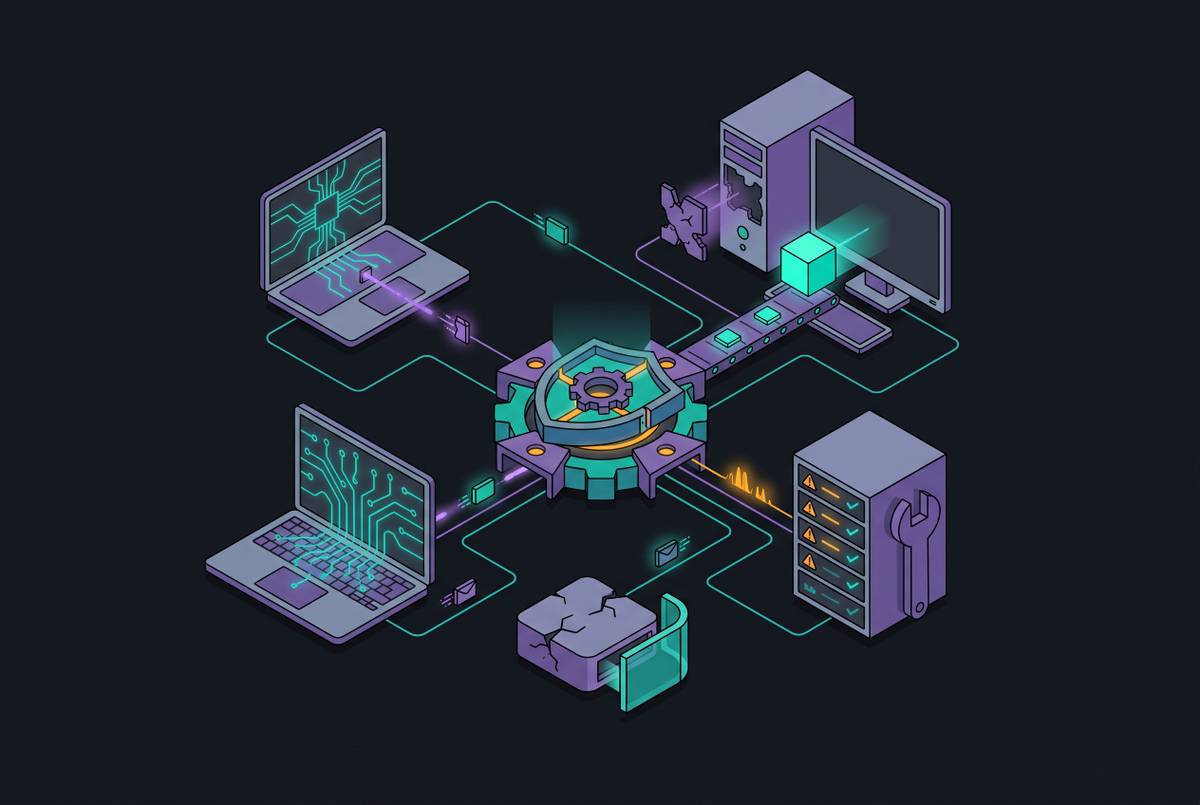
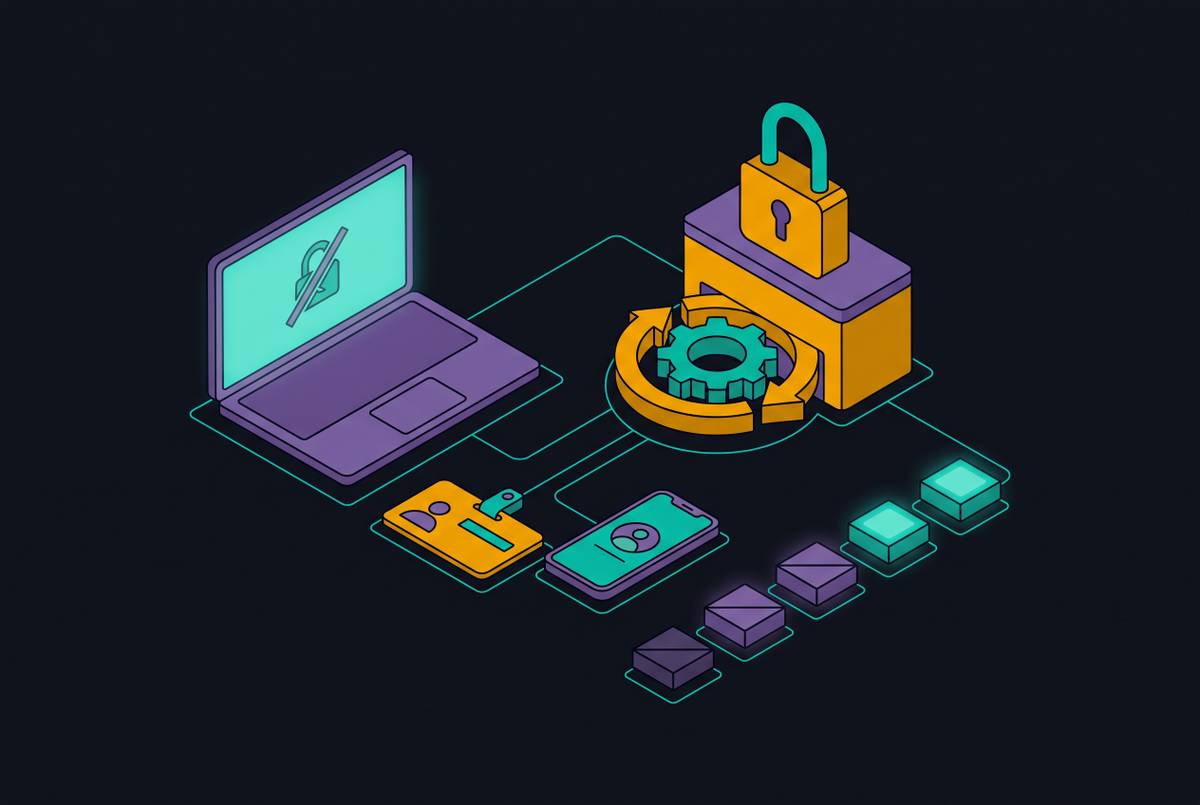
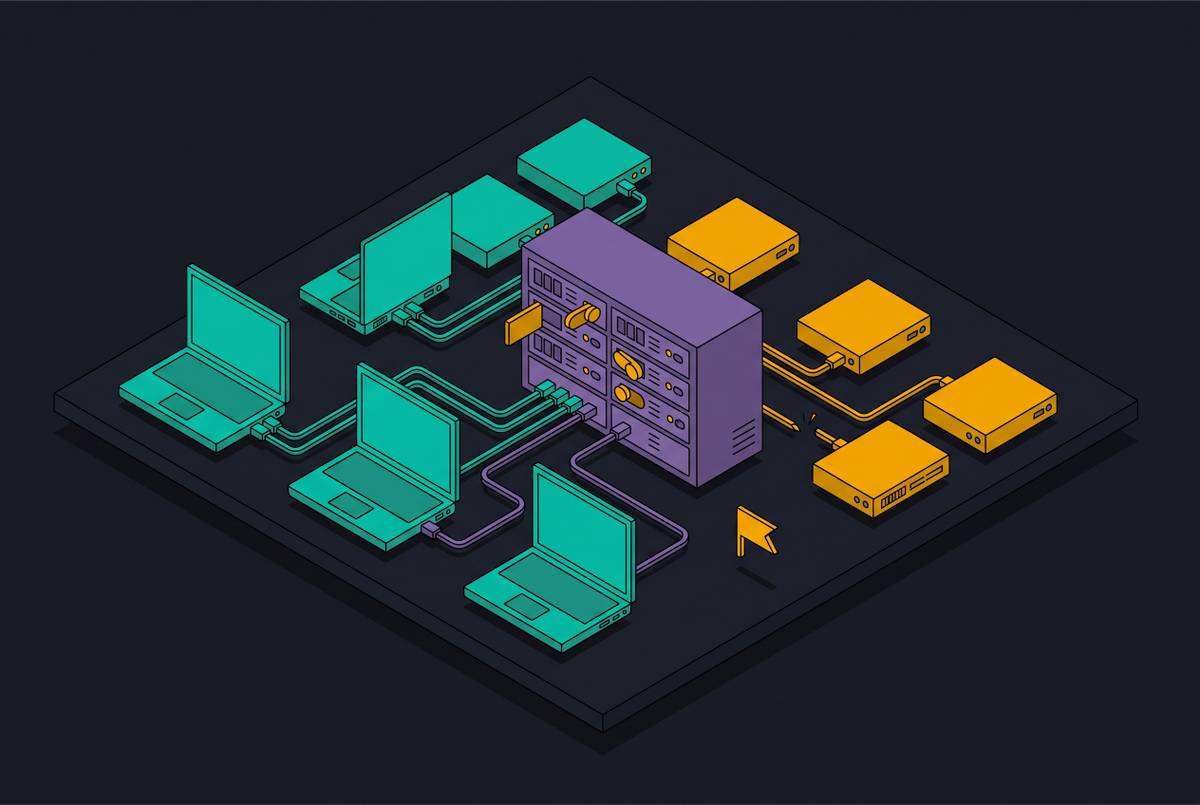
Endpoint Drift Detection and Automated Correction Workflows
Continuous monitoring and automated fixes keep endpoint configurations compliant.
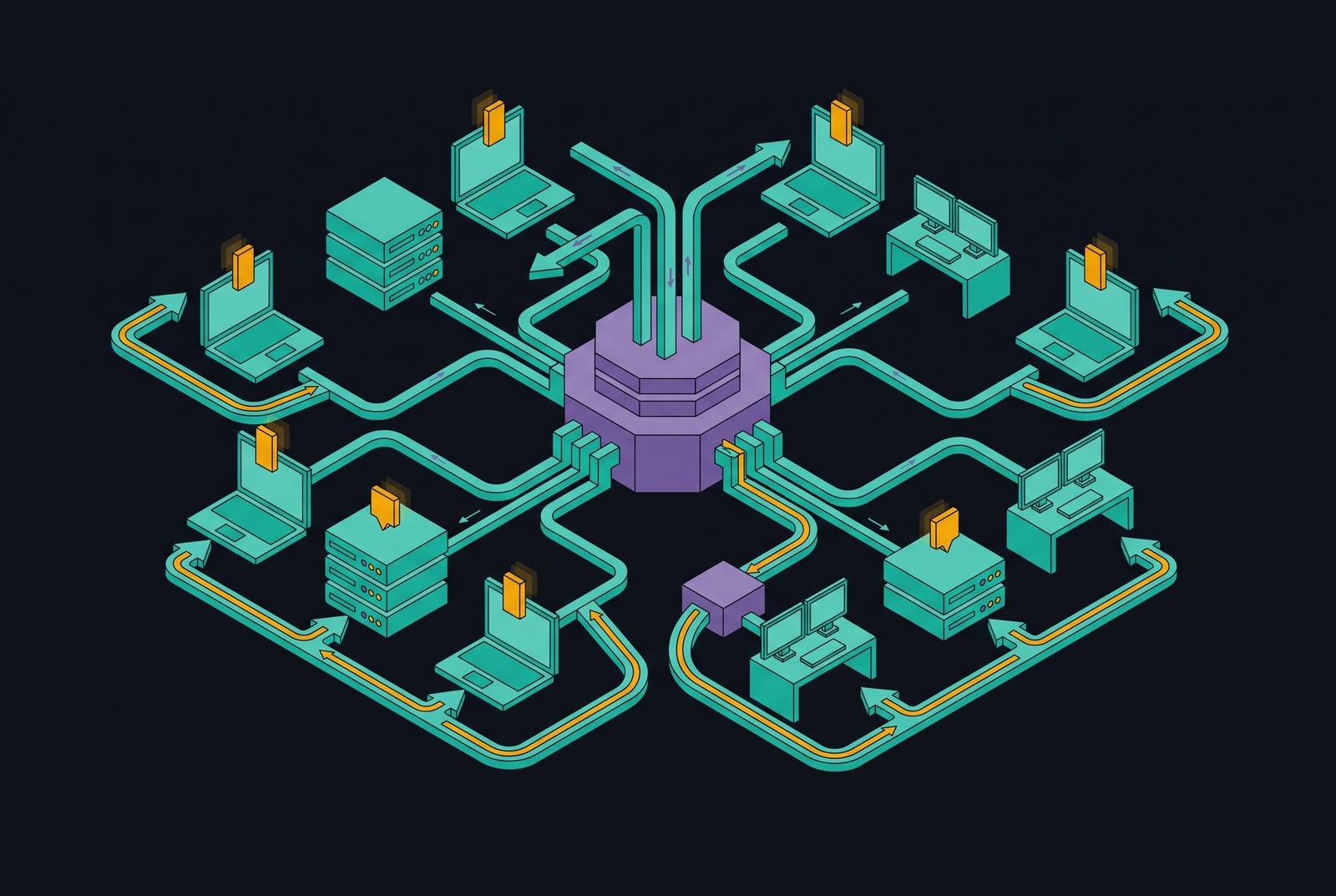
Configuration drift is the gap between what a device is supposed to look like and what it actually looks like, and that gap grows every day a machine stays in use. It doesn't happen because anyone stops caring about security. It happens because change never stops, and no team can track every settings tweak, every silent update, every one-off fix by hand.
A golden image starts drifting the moment it's deployed. Settings get changed to solve a one-off problem. Apps get uninstalled. Someone downloads a free AI writing tool nobody vetted. Devices go off-network for a week and miss a policy push. A security control fails quietly in the background, and nobody notices because nothing broke loudly enough to open a ticket.
Four things drive most of this in real environments: untracked manual changes made by users or admins trying to solve a problem fast, software updates that reset configurations without anyone realizing it, policy applied inconsistently across teams and regions, and cloud setups where constant provisioning creates small mismatches nobody's tracking.
Picture a typical Microsoft 365 environment. An admin loosens a conditional access policy because a traveling executive keeps getting locked out. Someone widens SharePoint permissions so a vendor can collaborate on a file. A project wraps up and the guest accounts tied to it stay active for months. A batch of new laptops ships without the current security baseline applied, because the imaging process hadn't caught up yet. None of that comes from malice, or even carelessness really. It's what happens when a lot of people make a lot of small, reasonable decisions without anything watching the cumulative effect.
The scale is the part people underestimate. Most enterprises see a high volume of configuration changes every day, across users, admins, operating systems, and business apps. Drift is a persistent condition, not something you pass through and fix. It's the baseline condition of running any endpoint fleet bigger than a handful of machines, and treating it as temporary is exactly how it gets out of hand.
What accumulated drift actually puts at risk
Unpatched systems and loosened firewall rules turn into the easiest entry point an attacker can ask for. Outdated access controls, left in place after drift, hand unauthorized users a path straight to sensitive data. None of this requires a sophisticated attack. It just requires someone finding the door left open.
Orphaned accounts are a common byproduct: a contractor's login that never got deactivated, an admin account created for a migration and forgotten. These sit there with excessive privileges attached, and they're exactly what attackers go looking for, because nobody's watching them.
Drift is also an identity governance problem, not just a network one. Endpoint settings shape how access gets enforced, logged, and reviewed, so when those settings drift outside an approved baseline, IAM and PAM teams lose confidence in the control environment they're supposed to be governing. An access log means less if the device generating it isn't in the state it's supposed to be in.
Compliance frameworks feel this directly. CIS Benchmarks, the NIST Cybersecurity Framework, ISO/IEC 27001, PCI DSS, HIPAA: all of them assume configurations match documentation. One unmanaged deviation can throw off an audit outcome, and failed audits bring fines that outlast the fine itself in reputational damage.
That's the auditor's actual headache: inconsistent configurations make it hard to produce an accurate compliance report at all. Auditors show up, compare policy documents against live system states, and find gaps nobody flagged internally, because nobody was checking continuously.
Ransomware remains a dominant threat for small and midsize businesses, and misconfigured endpoints are consistently among the entry points attackers use to get that ransomware in.
What makes this dangerous is how invisible it stays. Drift happens slowly, so organizations rarely notice it until something forces the discovery: a security assessment, an audit, or an actual incident. By then the exposure has already existed for however long the drift went untracked, and nobody knows exactly how long. That's the point.
How drift goes undetected without continuous monitoring
Periodic audits are reactive by nature. They capture one snapshot at one moment. They say nothing about the hundreds of changes that happened the week before the audit or the week after.
Manual tracking doesn't scale, full stop. As an endpoint environment grows, the volume of daily configuration changes outpaces what any human team can watch by hand, no matter how disciplined that team is.
Out-of-band changes are the trickiest part. When an operator makes a change directly in a console, bypassing the normal deployment process, it leaves no trace in the configuration record anyone's actually reviewing. Nobody hid it on purpose. It's just invisible to the system supposed to be watching.
Catching drift in real time takes a few specific pieces working together. Real-time state comparison checks live device states against the approved baseline constantly, not on a schedule. Drift pattern recognition helps spot recurring causes, like a specific unauthorized manual change or a failed update sequence that keeps resetting the same setting. Anomaly scoring gives each drift event a risk score based on which systems it touches, its compliance relevance, and how often it recurs, so teams know what to fix first. Historical logging of every deviation gives root cause analysis and audits something solid to work from.
Speed is the threshold that actually matters here. Detection has to surface deviations as they happen, not days or weeks later, because the window between a configuration slipping out of place and someone exploiting it can be short.
The five stages of an automated correction workflow
Stage 1: Baseline comparison. The system checks a device's current settings against the approved configuration baseline. Nothing downstream happens without this step.
Stage 2: Triage and prioritization. Not every deviation needs reversing immediately. Risk scoring decides which get auto-remediated on the spot and which get escalated for a human to look at first.
Stage 3: Automated remediation. Where governance rules allow it, corrections happen without a manual handoff. That can mean moving a non-compliant device into a more restrictive dynamic device group, pushing down the required configuration or app, running a script to restore approved settings, or kicking off a broader compliance workflow. For more serious violations, the response escalates: app reinstallation, forced script execution, a device freeze, or in extreme cases a wipe, all triggered automatically the moment non-compliance is confirmed. A downloaded AI tool or an uncertified app gets caught and handled here in real time, instead of surfacing much later in a periodic review.
Stage 4: Verification. After remediation runs, the system checks again to confirm the corrected state actually matches the baseline. Skip this step and the same drift can reappear immediately, which defeats the entire point of automating the fix.
Stage 5: Documentation. Every deviation and every remediation action gets logged. This is the audit trail compliance frameworks require, and it's also the record that makes root cause analysis possible later.
Manual correction is slow and error-prone by nature. A person has to notice the problem, diagnose it, and fix it, and each step takes time and invites mistakes. Automating the workflow shortens the gap between detection and correction, and it makes the response consistent every time, instead of depending on which admin happened to catch it.
What a platform needs in place before auto-remediation is safe
None of this works without a defined source of truth. An infrastructure-as-code repository, an MDM policy baseline, a golden image: one of these has to exist and stay current before any automated comparison means anything. Compare a device against a stale baseline and the "correction" just enforces yesterday's mistake.
Standardized configurations and consistent tagging matter more than people expect. Comparing device state across a mixed fleet of Windows, macOS, and Linux machines only works if resource identifiers and metadata line up the same way across all of them.
Real-time change telemetry has to run continuously, not in batches. A system that processes changes once a day is still, functionally, running a periodic audit with extra steps.
Governance has to define the boundaries before automation runs loose. What counts as drift worth acting on, versus acceptable day-to-day variation? Which deviations trigger automatic correction, and which require a human sign-off first? Where is escalation mandatory, particularly for high-criticality systems or configurations tied directly to compliance?
Here's the structural problem worth naming directly: security and IT teams often run on separate tools, with separate visibility into the same devices. When they can't see the same state at the same time, detection gaps open up, and remediation actions end up conflicting with each other. One team fixes something the other team just broke, and neither knows it happened.
Skip these foundations and auto-remediation does real damage. It can overwrite a legitimate emergency change made by someone solving an actual production issue. It can also mask the root cause of recurring drift by fixing the symptom over and over without ever flagging that a policy doesn't match how the business actually operates. Governance is what makes automation safe, not speed. Speed without it just breaks things faster and with more confidence.
How enterprise endpoint platforms approach drift correction in practice
Enterprise EDR platforms have started building drift correction directly into endpoint detection workflows, folding visibility and response into a single agent instead of bolting on a separate configuration management layer.
Falcon for IT, part of CrowdStrike's platform, is a clear example. It lets security and IT teams define a desired endpoint state, covering approved software, essential configurations, and required services, then continuously monitors for drift and remediates deviations automatically across Windows, macOS, and Linux. It runs enterprise scripts to cut down on manual IT handoffs, and it enforces recognized benchmarks including CIS, NIST, and DISA STIGs. The idea is straightforward: bring visibility and response together in one place so remediation happens at the speed detection actually needs, whether that means uninstalling a risky application, restarting a critical service, or fixing a misconfigured setting the moment it's found.
Organizations without dedicated security staff face a real deployment problem here, and building the expertise in-house before turning on automation is usually the wrong call. Onboarding and policy configuration across a large endpoint fleet takes real time and attention, even with good tooling, and a team without a security specialist on staff is better off leaning on an integrated platform that cuts that overhead from day one, or a managed layer on top of it. Trying to staff up first is slower, more expensive, and leaves the fleet exposed the whole time it takes.
The same logic applies to consolidated platforms generally. Combining device management, endpoint security, identity protection, and compliance automation into one solution closes the visibility gap that opens up when security and IT run separate tools. This matters most for smaller businesses, where the "security team" and the "IT team" are frequently the same one or two people, and every tool they don't have to context-switch between is time they get back.
A fragmented stack has a structural weakness baked in, and no amount of process discipline fixes it. Separate MDM, separate EDR, separate compliance tooling: drift showing up in one layer may simply never surface in another, because nothing's comparing the two. A single platform running off one policy baseline closes that gap by design, not by extra effort from the team running it.
Deployment speed matters too, more than it gets credit for. A platform that rolls out in weeks rather than months reaches full continuous monitoring while drift still has a small head start, instead of piling up quietly during a long rollout.
Keeping endpoints in their intended state as a continuous practice, not a project
Configuration drift is an ongoing operational reality, not a problem fixed once and closed out. Anyone who treats it as a project with an end date is going to get surprised again in six months, and probably by the same misconfiguration.
Baselines age. As the environment changes (new devices, new apps, new compliance rules) the source of truth has to get updated right along with it, or the comparisons it powers start producing false confidence instead of real answers.
Logging and audit trails do more than satisfy a compliance checkbox. Drift history reveals patterns worth paying attention to. A configuration that keeps drifting back to the same non-compliant state usually signals a deeper structural issue: the policy doesn't fit how the team actually works, and it needs revising, not re-enforcing for the fifth time.
For an organization starting from zero, the priorities are clear. Document a real baseline before turning on any automated detection. Start with the highest-risk deviations first, things like disabled encryption, removed security agents, or unauthorized privilege escalation, before expanding to lower-stakes settings. Fold drift tracking into existing change management processes, so out-of-band changes show up somewhere instead of disappearing.
The payoff compounds over time. Organizations that catch drift early deal with smaller corrections each time, because nothing's had the chance to pile up. Let deviations accumulate instead, and the eventual correction takes far more effort, usually arriving alongside an incident rather than ahead of one.
Sources
- Configuration Drift: Detection, Remediation & Best Practices
- Config Drift Detection and Correction
- absolute.com
- What Is Policy Drift? An Automatic Remediation Guide
- Autonomous Endpoint Management for Security and Compliance - N-able
- Configuration Drift Prevention - ControlUp
- What is Configuration Drift? A 2026 Guide | Reach Security
- tamnoon.io