Platforms That Unify Identity, Access, and Security Automation in a Single Workflow
Unified platforms replace fragmented identity tools with a single control plane.
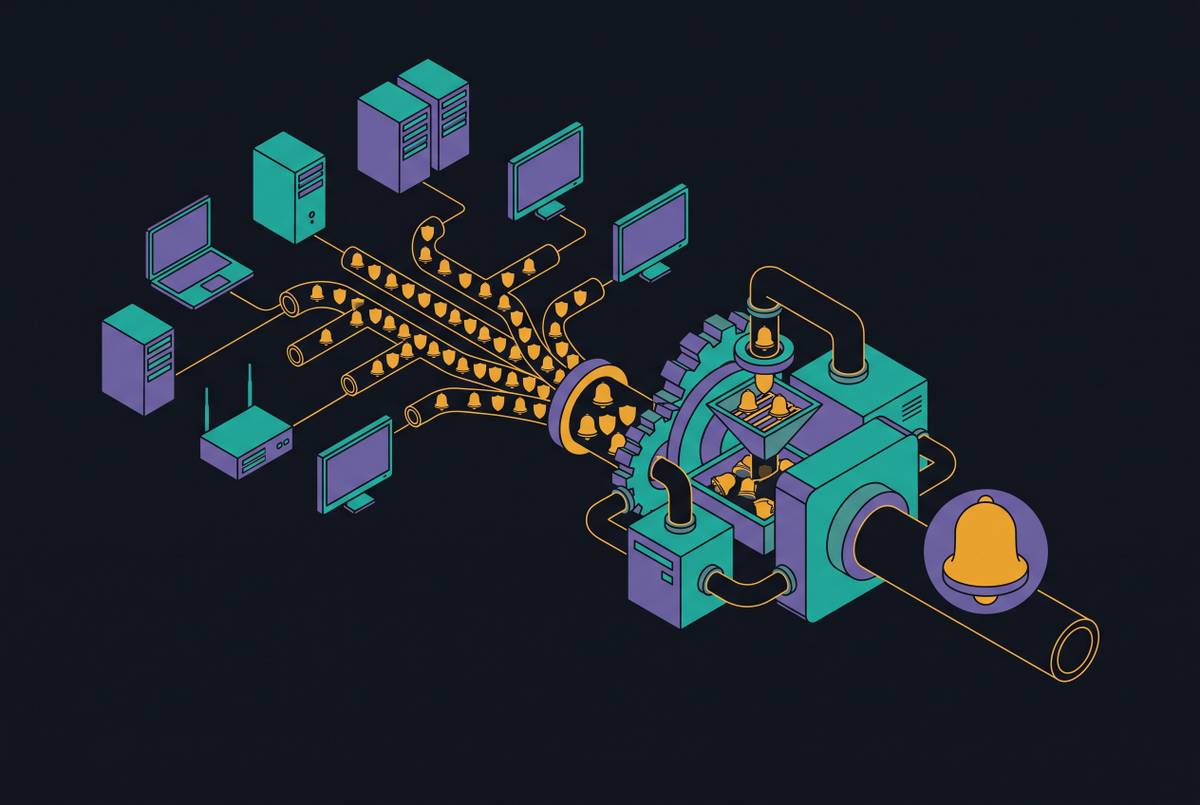
Most companies still run identity through five or six separate tools: one for privileged access, one for endpoint permissions, one for governance, one for cloud entitlements, one for basic login. Each has its own console, its own policy engine, its own record of who did what. The real attack surface lives in the space between those tools, in the account that exists in one system and goes completely unnoticed in another.
That gap is structural. Policy enforced at login isn't the same as policy enforced at every action after login, and when five tools each own a slice of that lifecycle, nobody owns the whole thing. An employee gets fired, IT disables their email, and their access to a cloud storage bucket or a third-party SaaS tool sits there untouched for weeks because checking it was never anyone's job. Multiplying that across a mid-size company running 40 or 50 SaaS subscriptions causes orphaned accounts to pile up fast. So does the cost of running it all: every extra tool means another audit trail, another vendor contract, another integration somebody has to babysit when an API changes.
How the threat landscape has shifted to exploit gaps at smaller organizations
Small businesses are the target. Estimates put the share of cyberattacks hitting small and mid-size businesses at 43% to 49% in 2026, depending on the source, with incidents occurring with alarming frequency. That's not a coincidence of scale. Attackers go where the defenses are thin, and fragmented identity tooling is exactly the kind of thin defense a ten-person IT team can't patch by hand.
Credential compromise sits at the center of this. Recent breach research found vulnerability exploitation behind 31% of breaches, with ransomware present in 48% of them. The ransomware exposure isn't spread evenly, either: 88% of SMB breaches in 2025 involved ransomware, compared to 39% at large organizations. That's better than a two-to-one gap, and a good chunk of it comes down to something simple. Big companies segment their networks and enforce access controls consistently across systems. Small companies, running identity through disconnected tools with nobody dedicated to reconciling them, often can't.
What a unified identity-access-security platform means, and what it does that a collection of tools cannot
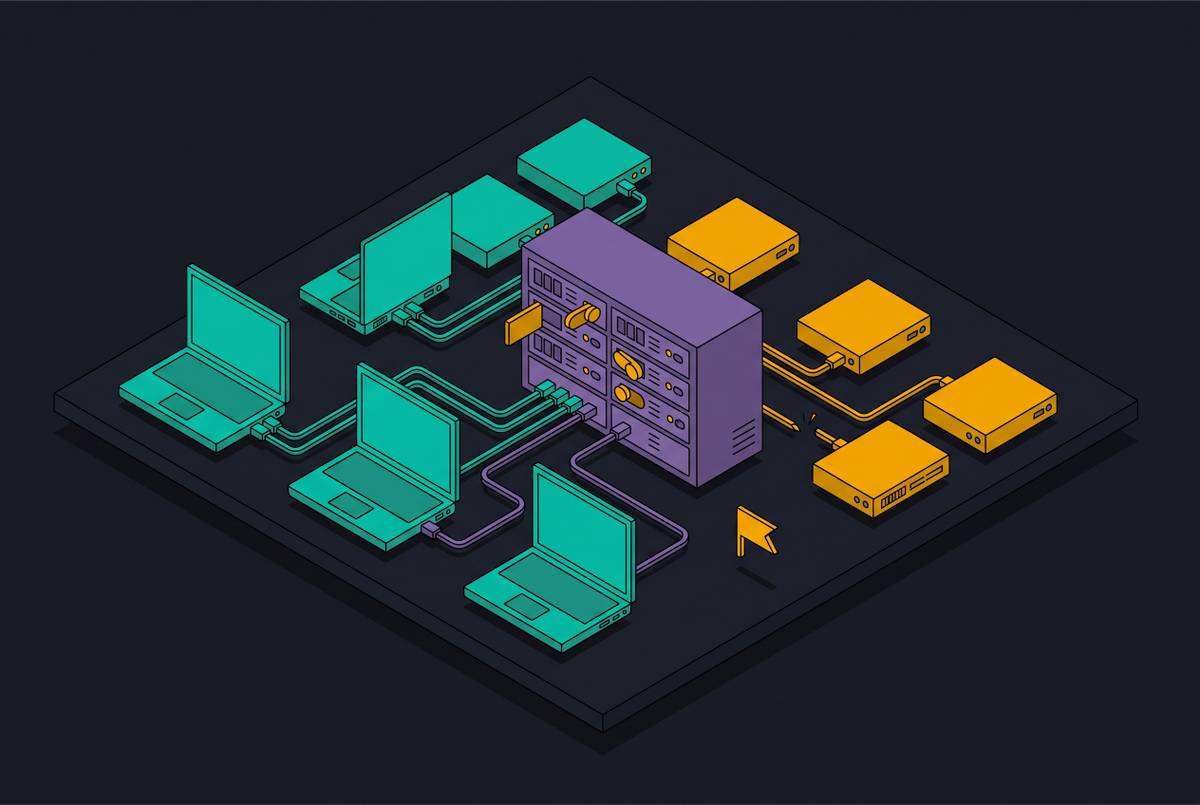
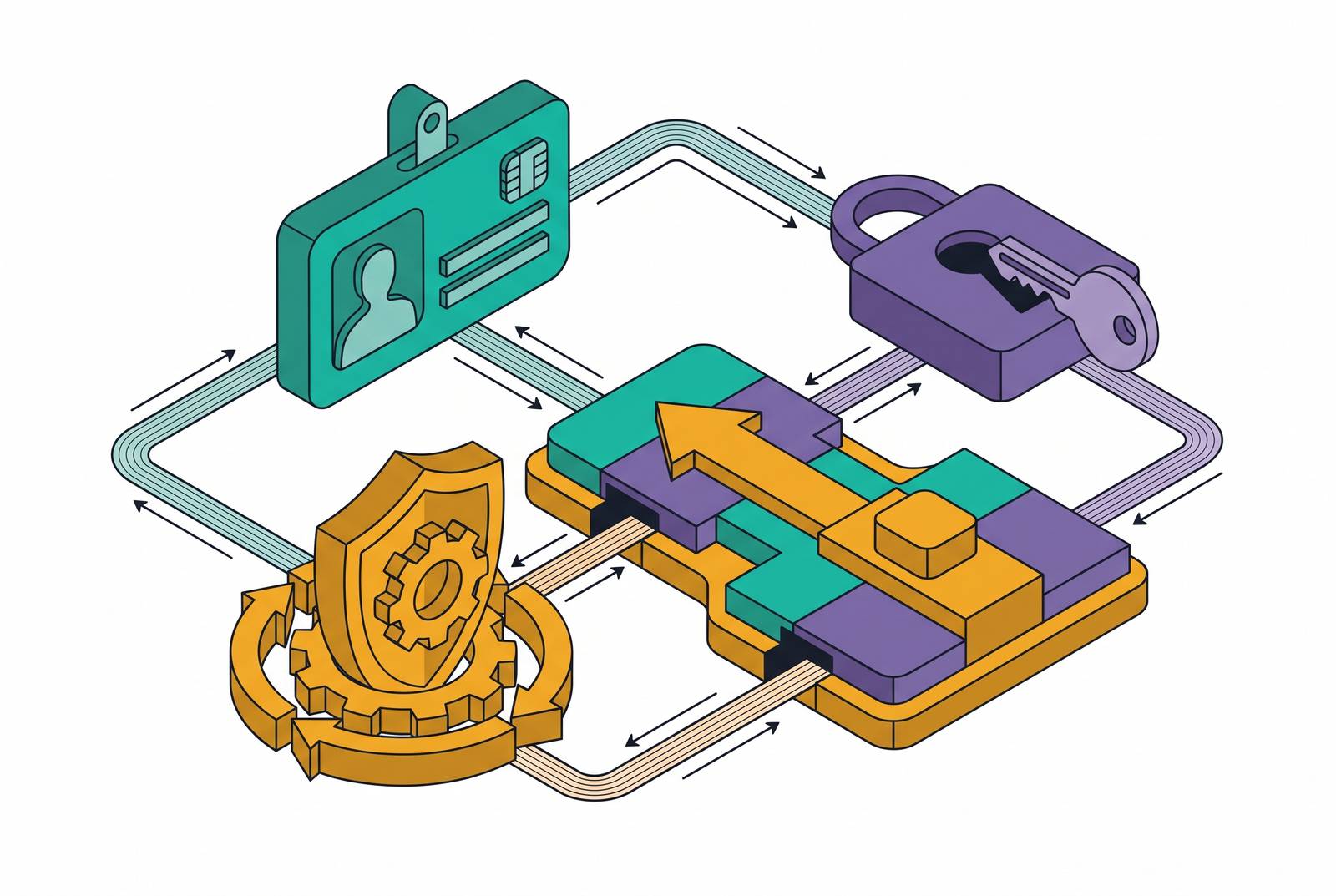
A unified platform enforces one policy, covering who can access what, under what condition, for how long, across the entire workflow from the day someone's hired to the day they leave. No admin sits there cross-referencing five dashboards to figure out if an account should still exist. The system already knows, because there's only one system to ask.
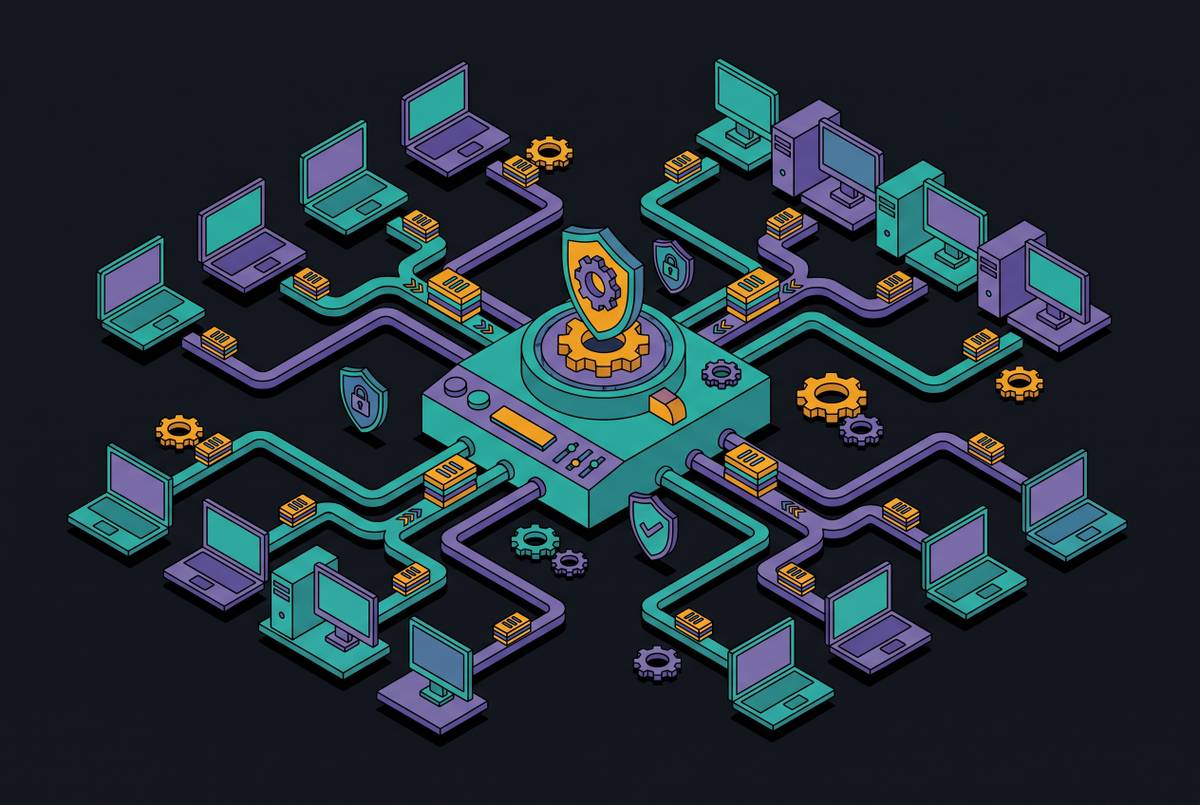
That comes from a single control plane. Changing a permission once propagates it everywhere that resource is governed, instead of requiring five separate updates in five separate consoles. That's what actually saves time on a Tuesday afternoon, when someone's manager calls asking why a terminated contractor still has read access to the finance drive.
The bigger payoff appears in lifecycle automation. Joiner-mover-leaver workflows connect the HR system, the directory, the ticketing platform, and whatever business apps the company runs, so access follows the person automatically. Someone moves from sales to finance, their old permissions drop and new ones apply without a ticket sitting in a queue for three days. Someone leaves the company, and access disappears everywhere at once, not just in the one system somebody happened to remember.
What's actually converging inside these platforms shapes how well security gaps get closed and how much manual work IT teams face. Modern unified platforms bring together single sign-on, multi-factor authentication, privileged access management, endpoint privilege management, identity governance and administration, cloud infrastructure entitlement management, and secrets management, all running on one shared data model. That's the whole point, and it's the part vendors get wrong most often: bolting six modules together behind a shared login page is not the same thing as unifying them. One data model that every function reads from and writes to is what makes it real.
How the 2026 platform launches at RSA and beyond reflect the market's direction
RSA Conference 2026 made the direction clear. The major launches weren't about adding another point solution to the pile. They were about collapsing the pile.
Securden's Unified Identity Security Platform is the clearest example. The company positions it as the first platform to cover the full spectrum of human, machine, and AI identities in one package, folding in PAM, EPM, IGA, CIEM, non-human identity management, and AI agent security, alongside vendor access management, DevOps secrets management, self-service password reset, and secure remote assist. The architectural claim that matters most: it removes the need for multiple servers, multiple agents, and a stack of integrations to hold it all together. CEO Bala Venkatramani framed it as reimagining PAM as a low-friction, unified control plane, then stretching that same plane across EPM, IGA, CIEM, non-human identities, and AI-driven identities.
1Password took a different angle with Unified Access, built around a discover-secure-audit model covering human, machine, and AI agent identities together. At launch, the company said it protects more than 1.3 billion credentials and secrets across millions of endpoints. Launch partners include Anthropic, Cursor, GitHub, Perplexity, and Vercel, plus Runlayer for agent control, Natoma as an MCP gateway, Commvault for resilience workflows, and AI browsers including Anchor Browser, Browserbase, KERNEL, and Perplexity Comet. The audit capability was announced as coming soon, not live at launch, and runtime scoped credential issuance for agent workloads is planned for later in 2026. The same day, 1Password also announced a Users API for Partners, letting security platforms suspend or restore user access programmatically during an incident, using OAuth 2.0 and scoped tokens instead of long-lived credentials sitting around waiting to be stolen.
Palo Alto Networks entered with Idira, positioned to consolidate the identity security market around a single control plane that discovers risk, applies privilege dynamically, and governs the identity lifecycle from first access through the final session.
Three vendors, three different entry points into the market, produce the same conclusion: separate tools for separate identity functions are on the way out.
How Microsoft, Okta, Ping, CyberArk, and JumpCloud fit into the unified-platform picture
The 2026 landscape isn't a blank slate. Microsoft and Okta anchor the mainstream, Ping has absorbed ForgeRock to own the complicated end of the market, and CyberArk keeps pushing identity security past the basics. None of them is universally the right answer, and picking the one your peers picked is a bad way to decide. Each fits a different shape of organization, and getting that fit wrong is where a lot of these deployments go sideways.
Microsoft Entra ID, the platform formerly known as Azure AD, is the most widely deployed IAM product on the market. It bundles single sign-on, MFA, Conditional Access, Privileged Identity Management, and Identity Governance directly into Microsoft licensing. For a company already standardized on Microsoft 365, the economics are hard to argue with, since a lot of that value comes built into a subscription the company's already paying for. The tradeoff is visible outside that ecosystem: cross-platform neutrality lags behind specialist tools, and the advanced governance features carry their own licensing cost on top of what's already bundled in.
Okta is the standard-bearer for vendor-neutral identity. It runs the largest independent app catalog in the space, reported at over 8,000 integrations, with mature standards-based lifecycle automation, adaptive MFA, and expansions into governance and PAM. It fits best in mixed-SaaS environments, companies without one directory anchoring everything, that want their identity layer to stay independent of any single platform vendor.
Ping Identity, now folded together with ForgeRock, owns the complex end of enterprise and customer identity. The ForgeRock combination widened what the platform can handle, and it's the go-to for regulated industries or organizations juggling complicated federation setups alongside customer-facing identity at scale. CyberArk and JumpCloud round out the field from opposite directions: CyberArk still sets the bar for privileged access in large, security-mature environments, while JumpCloud has built its whole pitch around the lean IT team, directory services, device management, and SSO in one place for companies that never had a dedicated security hire to begin with.
The arrival of AI agents changes what "unified" must mean going forward
The old model assumes a human logs in once, gets a set of permissions, and those permissions get reviewed every quarter or so. That model was built for people clicking into discrete applications, and AI agents don't work that way.
An agent calls APIs continuously, chains tools together, and runs workflows on its own, touching multiple services and data sources without a person in the loop for most of it. That breaks the old assumption completely. Authorization has to happen in real time, checked against what the agent is doing right now, instead of being verified once at a login screen and left alone for the rest of the session.
Credential sprawl gets worse with agents in the mix, too. Agents deploy secrets and tokens programmatically across environments, and under deadline pressure, employees paste credentials into development tools, AI browsers, and automation pipelines that sit entirely outside any governed vault. Nobody sets out to create that exposure. It happens because saving twenty minutes felt more urgent than filing a request through the proper channel.
Most small businesses have no written AI use policy. That means each employee makes access decisions on their own, with no guidance, and under deadline pressure, one of them pastes client data or financial figures into a free chatbot just to save time. That's a live, documented gap in how SMBs handle AI tools right now, and it's exactly the kind of gap a unified platform with AI agent coverage is built to close.
What an SMB or lean IT team should look for when evaluating a unified platform
Before evaluating any platform, get the free stuff right first. MFA, automatic updates, strong passwords, and basic user access controls stop more than 80% of attacks on their own. None of that costs a dollar, and none of it requires a vendor conversation.
Before anything else, work through three government resources: the NIST Cybersecurity Framework 2.0 Small Business Quick-Start Guide, written in plain language for teams without deep IT expertise; the FCC's Small Biz Cyber Planner 2.0 for building a customized plan; and FTC small business guidance. All three are free, and all three will surface gaps in the current setup before anyone spends a cent on a platform.
Once that foundation is in place, deployment speed becomes the real test. If a platform needs months of professional services just to get configured, it's not usable by a five-person IT team, no matter how good the feature list looks on paper. Ask vendors directly for time-to-value in weeks, not quarters, and treat a vague answer as a red flag on its own.
From there, a handful of criteria separate a genuine unified platform from a rebranded bundle. A single control plane means one place to see every identity and access event. Lifecycle automation should close the orphaned-account gap without a ticket, running joiner-mover-leaver workflows automatically instead of depending on someone remembering to update a spreadsheet. Coverage needs to extend to machine and AI identities, not just human logins, since a platform that only governs people is already behind where the threat actually lives. Audit trails need to come straight from the platform natively, showing who accessed what, when, and under what authorization, rather than getting assembled after the fact from logs scattered across four tools.
Complexity has to match the organization, too. Most small businesses don't need an enterprise-grade system built for a security team of forty; the right setup fits how the team actually works day to day, not how a much bigger company works.
None of this is about chasing the platform with the longest feature list. It's about closing the seam between tools where attackers already know to look, and that seam has a specific shape: the account nobody remembered to close, the permission nobody remembered to revoke, the login nobody thought to check twice.
Sources
- Securden Launches World’s First Unified Identity Security Platform at RSA 2026
- 1Password Launches Unified Access for AI Agent Security | 1Password
- Securden Unveils the World
- Idira | The Identity Security Platform
- 1password.com
- spacelift.io
- Small Business Cyberattacks 2026: Why SMBs Are #1 Targets
- totalassure.com