Alert Fatigue Reduction Through Endpoint Automation
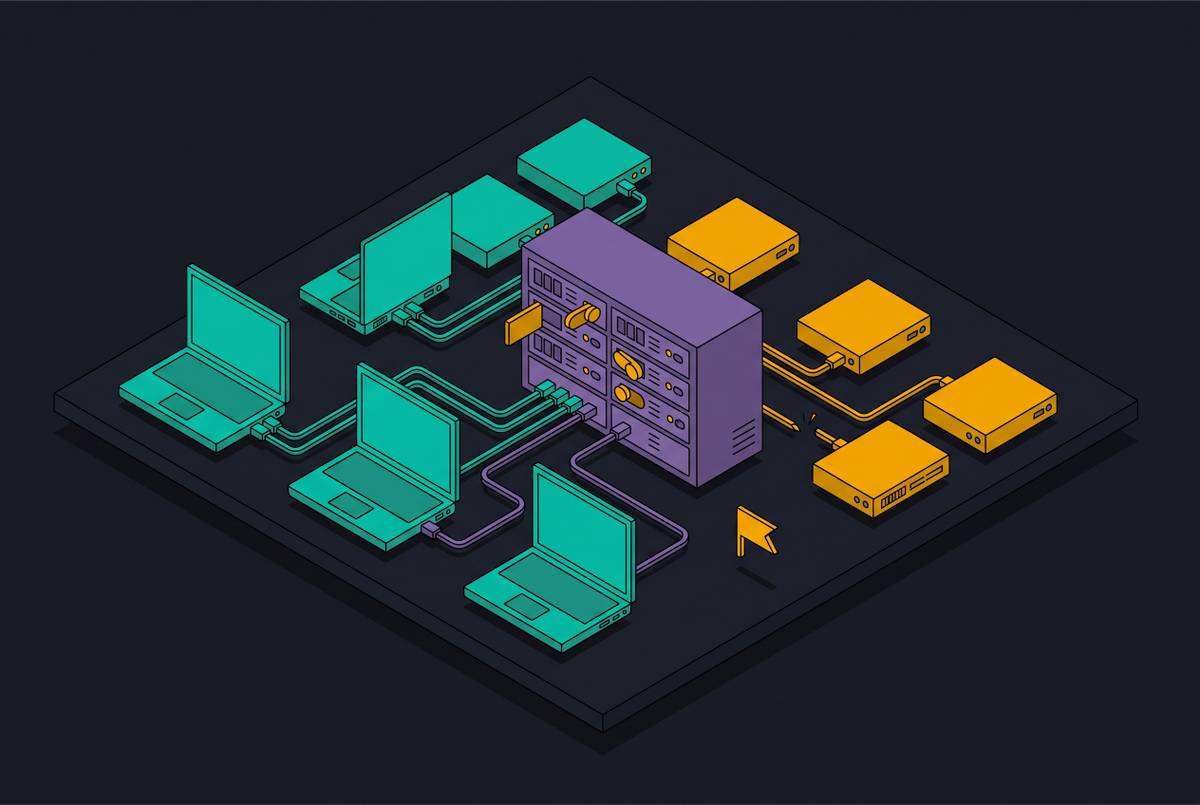
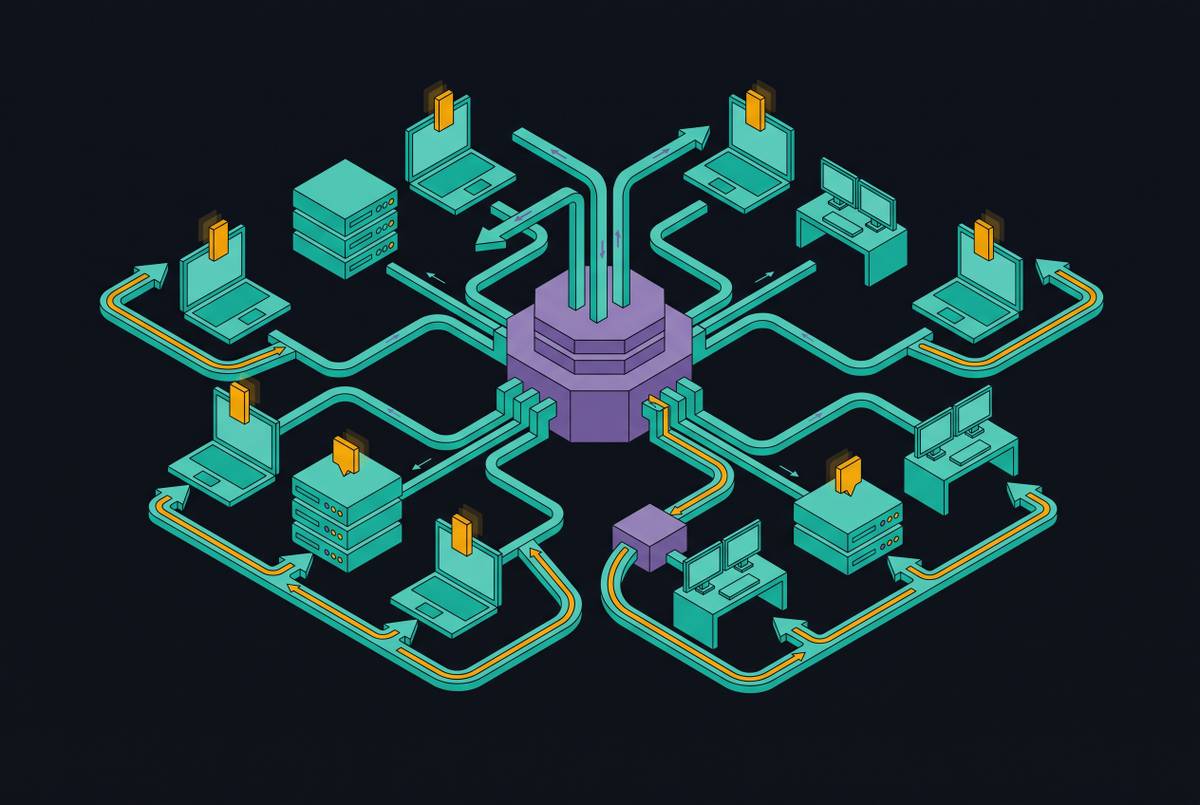
Automation cuts false positives and groups related alerts into one incident.
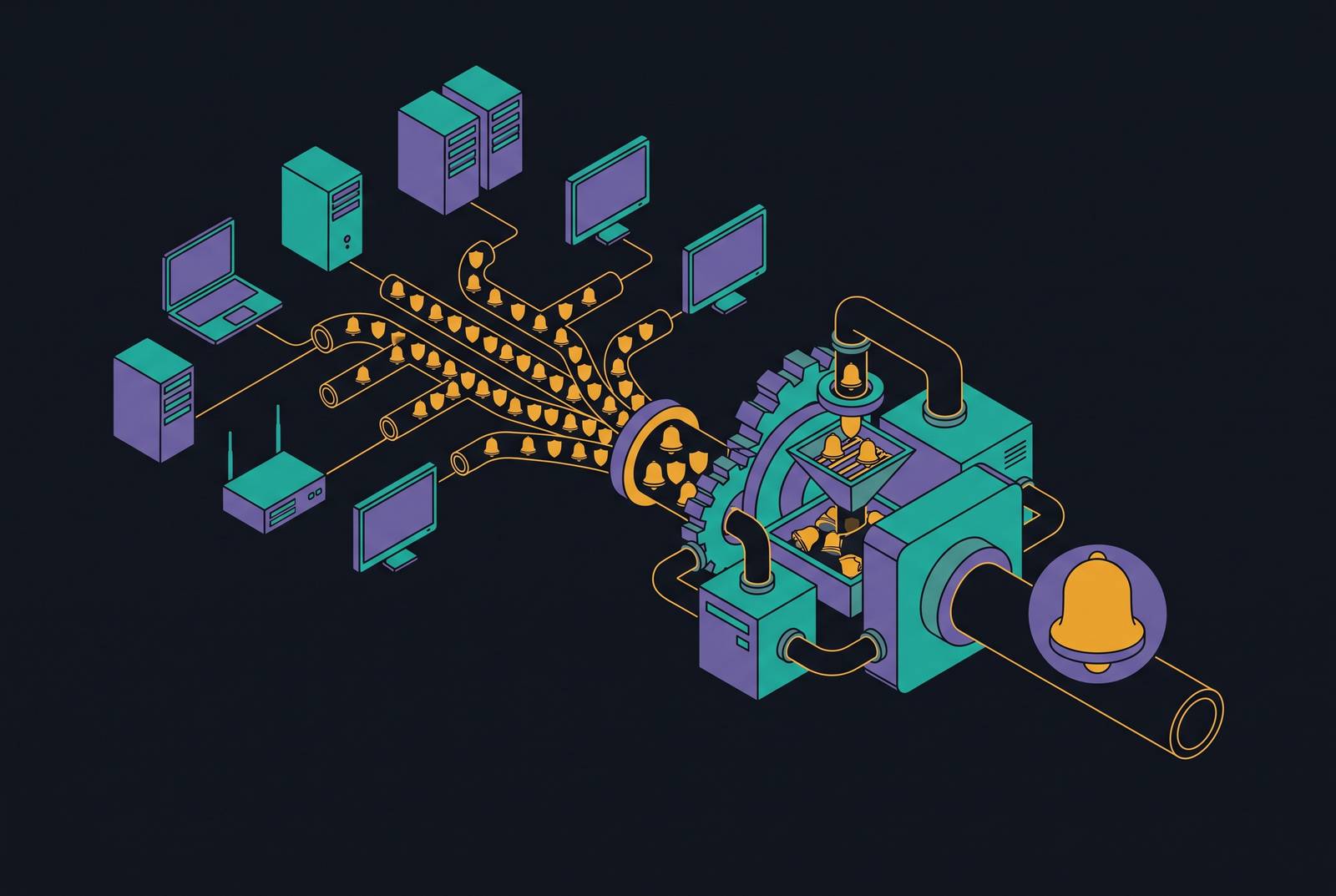
Alert fatigue is a signal quality problem. It's a signal quality problem, and endpoint automation fixes it by cutting false positives, tying related events together, and closing out known-safe activity before a human ever sees it. For lean IT teams without a dedicated security analyst, this is the difference between drowning in noise and actually catching threats.
Alert fatigue is what happens when the volume of security alerts outpaces what a human brain can reasonably process. Once that threshold gets crossed, analysts start missing things. They delay. They ignore. No one can stay sharp against a wall of notifications that never stops growing.
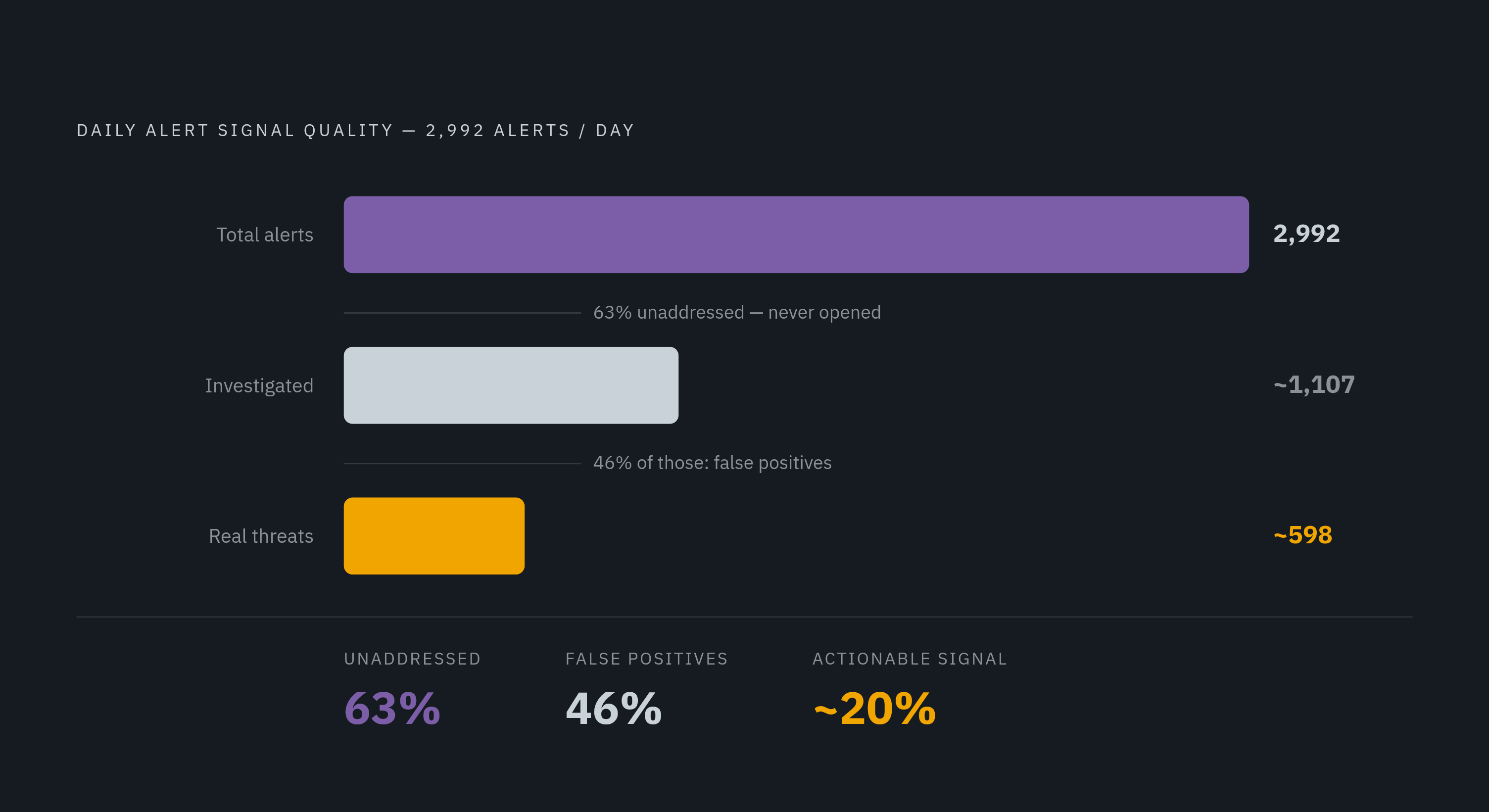
Here's the paradox nobody likes to say out loud: the tools bought to protect a company are the same tools burying the people who have to act on them. Organizations field an average of 2,992 security alerts a day, and Vectra AI's 2026 research found 63% of those go unaddressed. That's most of the workload getting dropped on the floor. That's most of the workload getting dropped on the floor.
The instinctive fix is to hire more analysts. But that doesn't touch the underlying architecture, it just spreads the same misery across more people. And for a lot of organizations, that path isn't even open. ISC2's 2025 numbers put the global cybersecurity workforce gap at 4.8 million professionals, with 59% of teams reporting critical or significant skills shortages. There aren't enough qualified people to hire even for companies with the budget to try.
So what's actually driving the noise? Security stacks built from a pile of specialized tools, each one shouting into its own alert stream with no shared context and no real correlation between them. Microsoft and Omdia's 2026 State of the SOC research shows organizations run an average of 10.9 separate security consoles, with 69% deploying ten or more detection tools and 39% running twenty or more. Microsoft and Omdia's State of the SOC research found only about 59% of those tools feed data into a SIEM automatically, leaving analysts to manually stitch the rest together by hand. One incident can throw off dozens of separate alerts across different tools, and each one gets investigated as its own case, from scratch.
That's the root cause: not effort, not staffing, but the quality of the signal reaching the people who have to respond. Fix the architecture, and the noise drops at the source.
Sources of alert noise: false positives, tool sprawl, and the cognitive cost of manual triage
False positives do the most damage. Microsoft and Omdia's State of the SOC report found that 46% of all alerts turn out to be false positives, meaning close to half of an analyst's day generates zero actual security value. The 2025 SANS Detection and Response Survey backs this up: 73% of security teams name false positives, not raw volume, as their top detection challenge.
Investigating each alert takes real time, too. Cybersecurity Insiders found that the average alert investigation runs 70 minutes, with 56 minutes passing before anyone even starts acting on it. That's a structural delay built directly into the workflow, before anyone's made a single decision.
And the volume keeps climbing. Cybersecurity Insiders reported that 77% of organizations saw alert volume increase over the past year, with 46% experiencing a jump of 25% or more. Meanwhile the human cost piles up quietly in the background: analyst burnout remains a persistent problem, and the average analyst stays in the role just three to five years. Every departure takes institutional knowledge with it, and the next hire starts from zero.
Under that kind of pressure, people cope in predictable, damaging ways. Blanket suppression rules get written to silence entire categories of alerts, creating blind spots that attackers can walk straight through. Analysts start skimming past anything marked low or medium severity, wholesale. Tool severity scores get trusted over actual context, because there's no time to dig deeper. A 2026 paper submitted to ACM Computing Surveys documented these as well-known coping mechanisms, not signs of a careless team. They're what happens to anyone under sustained alert pressure.
Industry research found that 47% of analysts point to alerting problems, not external threats, as the most common source of inefficiency inside the SOC. The dysfunction is internal to the workflow itself.
And tuning alone won't fix it. RedLegg's 2026 research found that SIEM alert fatigue persists even as automation assisted by one model improves, because generic out-of-the-box rules, static thresholds, and shallow correlation logic keep regenerating noise even after teams try to cut volume down.
What endpoint automation does to the alert stack
A 2026 taxonomy submitted to ACM Computing Surveys breaks AI-driven alert automation into four distinct jobs. Filtering cuts noise before it ever reaches a human queue. Triage ranks what's left by actual risk, not by whatever severity label a vendor assigned. Correlation groups related events across different tools and time windows into one incident. And generative augmentation summarizes what happened, drafts investigation notes, and suggests next steps.
Correlation is the one that matters most structurally. Instead of an analyst getting twenty separate pings from five different consoles, they get one case that lays out the entire attack chain in a single view.
Automation also handles known-safe activity on its own. Behavioral pattern matching can recognize routine events, a scheduled scan, a software update, an expected admin login, and close those out without ever routing them to a person. For confirmed threats, automated containment can act rapidly, isolating the endpoint and blocking further access, well before an analyst has opened the queue. For anything genuinely ambiguous, the system escalates it with a full investigation summary already built, so the analyst reviews and decides instead of starting cold.
This is part of a broader shift toward case-driven work. High-performing SOCs stop treating every single alert as its own unit of labor. Grouping related signals into one case removes a huge chunk of the repetitive, low-context noise that wears people down.
Endpoints are the right place to put this kind of automation, because that's where most attacks actually execute. Automating at that layer catches behavior-based and credential-based threats that a static signature rule would sail right past. Identity matters here too. MSSP Alert reported that identity weaknesses sat at the heart of nearly 90% of incident response investigations in Unit 42's Global Incident Response Report. Endpoint automation that also watches authentication and access behavior closes the gap between what's happening on a device and what's happening to a credential.
Automation's impact on triage workload
Torq's research claims AI-powered triage platforms can automate 95% or more of Tier 1 alert investigation. That's a striking number, and it's worth pressing on rather than accepting flat.
The case data behind it points to a specific cause: inconsistent tuning and manual triage drive the false positive rate, and fixing them produces the following results. In one representative pattern from Torq's 2026 research, the false positive rate fell from 70% to under 20% within 60 days of deployment. Average triage time per incident dropped from 35 minutes to 8. The team stopped reacting to alerts all day and started actively hunting for threats, something they hadn't had time to do before. Estimated annual savings from avoided headcount came out to $180,000.
IBM's 2025 data shows the financial upside runs even wider: organizations using AI extensively cut their breach lifecycle by 80 days and saved roughly $1.9 million on average. This isn't just an operational convenience, it reduces costs visible directly on the balance sheet. And the cost of not automating is well documented too: Vectra AI estimated that manual triage costs organizations in one country's market. market $3.3 billion a year. That's the baseline the industry is working down from.
But there is a real ceiling here: AI-enabled SOCs don't automatically shrink staffing needs, they reshape what skills those staff need. Automation clears away repetitive grunt work, but someone experienced still has to investigate what gets escalated and keep the models tuned. RedLegg's 2026 research makes a similar point: AI cuts noise, but it can't make up for poorly tuned detection logic or missing context about how the organization actually operates. Baselining and ongoing tuning stay essential no matter how good the model gets.
Lean teams that want to know if automation is actually working should track a short list of numbers: the alert-to-analyst ratio over time, mean time to triage and to respond, the split between auto-closed and investigated alerts, false-positive rates broken out by specific rule (this catches bad tuning before it snowballs), and a periodic audit of dismissed low-severity alerts to find blind spots that fatigue may have created.
The importance of alert fatigue for teams without a dedicated security team
IBM's 2025 Cost of a Data Breach report found small businesses without dedicated security staff take an average of 207 days to notice they've been breached. By day 207, an attacker has had plenty of time to move laterally, pull data out, and often plant a persistent backdoor on the way out.
Fewer than one in three SMBs rate their own defenses as mature enough to actually stop a breach. Most either handle security themselves or lean on someone with no formal training in it. And the coping habits visible in enterprise SOCs, blanket suppression, severity skimming, blind trust in a tool's own risk score, are exactly the defaults an untrained IT generalist falls into without anyone around to catch it.
The 2025 Unit 42 Global Incident Response Report, drawing on 700 real-world investigations across 49 countries, found that 13% of social engineering incidents traced back to alerts that were ignored or never triaged. Not sophisticated evasion. Just noise that nobody got to. And the consequences of that gap are steep: 60% of social engineering incidents led to actual data exposure, compared with 44% across all attack types combined. That gap is what happens when response gets delayed or skipped.
There's regulatory exposure layered on top. Delayed detection can push a company past reporting windows set by NIS2, GDPR, or CIRCIA. And FTC Safeguards Rule violations can run up to $51,744 per violation, per day.
For a lean team, the real problem is that every single alert demands a decision from someone who's also managing devices, running IT, and handling everything else on their plate. It's that every single one demands a decision from someone who's also managing devices, running IT, and handling everything else on their plate. Automation that removes the decision entirely, before it ever reaches that person, is worth proportionally more here than inside a fully staffed SOC.
The practical controls a lean IT team should have in place before tuning alert logic
Automation only works well sitting on top of a solid baseline. Without the right controls feeding it good data, it just correlates noise more efficiently instead of surfacing real threats.
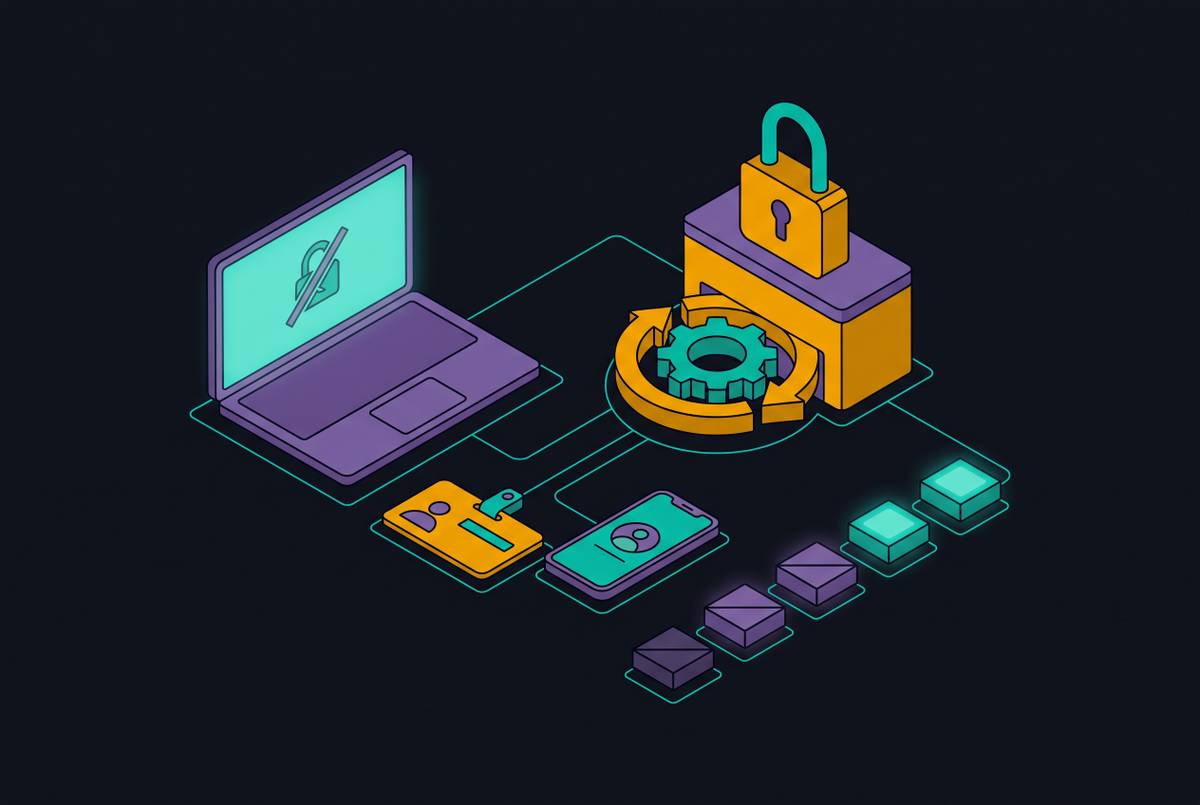
CISA's Cyber Guidance for Small Businesses names multi-factor authentication as the single highest-return step an organization can take: making sure every staff member uses MFA to log into key systems, especially email.
Beyond MFA, CISA points to a short list of foundational controls. MFA belongs on every email, cloud, and admin account, since it blocks a large share of credential-based attacks right at the door. Endpoint protection needs to include at least detection-and-response-level capability across every business device, since plain antivirus only catches known threats and modern attacks increasingly use phishing written by one model, stolen credentials, and behavior-based ransomware that signatures never flag. Backups need tested restoration procedures, not just a checkbox that says backups exist. Email security has to actively defend against phishing and social engineering. Insufficient user training raises breach risk and costs response time: the human element remains a leading factor in breaches, and organizations running regular training saw phishing reporting rates from employees improve fourfold, according to the Verizon DBIR 2025.
These controls do double duty. They cut breach risk directly, sure, but they also shrink the volume of genuine alerts that automation has to process in the first place, improving signal quality before any tuning work even starts.
For teams with no security expert on staff, CISA recommends something simple: know exactly what to do the moment an alert fires. Quarterly tabletop exercises, walking through scenarios like a ransomware-locked laptop, keep that answer sharp instead of theoretical.
Criteria for a platform that reduces alert noise rather than adding to it
Fragmentation itself carries a price tag. Research consistently shows that organizations running highly fragmented security stacks pay a significant operational labor premium over those with consolidated tooling, a gap that shows up directly in analyst hours and triage overhead. That's not an inconvenience, that's a line item.
Consolidating tools does several things to alert quality at once. It kills off duplicate alerts fired by overlapping tools watching the same surface. It allows cross-surface correlation, endpoint behavior, identity signals, and device posture, sitting in one context instead of three separate consoles. And it cuts down the manual stitching-together that eats up a big chunk of what Cybersecurity Insiders found to be a 70-minute average investigation window.
When evaluating a platform, a few questions separate real signal-quality tools from alert factories dressed up in a nicer interface. Does it auto-resolve known-safe conditions, or does everything still go to a human's queue? Does it correlate identity, endpoint, and compliance signals into one case, or does each surface generate its own alert stream? Is tuning continuous and built in, or does it need a dedicated detection engineer just to keep it working? Does it hand an analyst a finished investigation summary when it escalates something, or does that analyst start from a blank page? And how long does deployment actually take? A platform that needs months of configuration is adding overhead before it's cut a single alert.
It's worth being clear-eyed about the managed security market too. Traditional MSSPs mostly alert and hand off: they forward high-volume alerts to a client's internal team for triage, which assumes that internal team has the time and training to act on them. For a lean IT team, that just reconstructs the same alert fatigue inside a service contract. MDR raises the bar somewhat by including active response and threat hunting as part of the deal, but Forrester has noted that plenty of MSSPs have simply rebranded as MDR providers without actually building the response capability behind the label. Buyers should ask, point blank, what the provider does the moment an alert fires, and who's contractually on the hook for containment.
For a company with no dedicated security team, the strongest argument is for a single platform that pulls device management, endpoint security, identity protection, and compliance automation into one place, enforced continuously without constant manual configuration. That's the architectural fix this whole problem has been pointing toward from the start. Deployment speed matters here too: a platform that stands up in weeks, not months, starts cutting noise on a timeline a lean team can actually live with.
What that looks like day to day: a founder, an IT generalist, or an ops lead gets a layer that quietly resolves known-safe activity, escalates real threats with the investigation already half-done, and doesn't demand a security expert on payroll just to keep it tuned.
Sources
- What Is Alert Fatigue? Causes, Impact & How to Reduce It
- AI-Driven Security Alert Screening and Alert Fatigue Mitigation in Security Operations Centers: A Comprehensive Survey
- Reducing SIEM Alert Fatigue in 2026: How Tuning Improves Detection (Even with AI)
- Why 2026 Is a Turning Point for MSP Cybersecurity | perspective | MSSP Alert
- Alert Fatigue Is Killing Your SOC. Here's What Actually Works in 2026.
- dl.acm.org