What Actually Happens When One Platform Owns MDM, EDR, and Compliance Together
Unified platforms eliminate handoffs and gaps that slow threat response and audit preparation.

A unified MDM, EDR, and compliance platform gives small businesses without a security team more than fewer consoles to manage. When all three use the same data layer, the device settings, threat activity, and compliance records stay in sync. The real gain is enforcement that can act immediately and evidence captured as controls run, rather than assembled after an incident or before an audit.
Why MDM, EDR, and compliance break down when they operate as separate tools
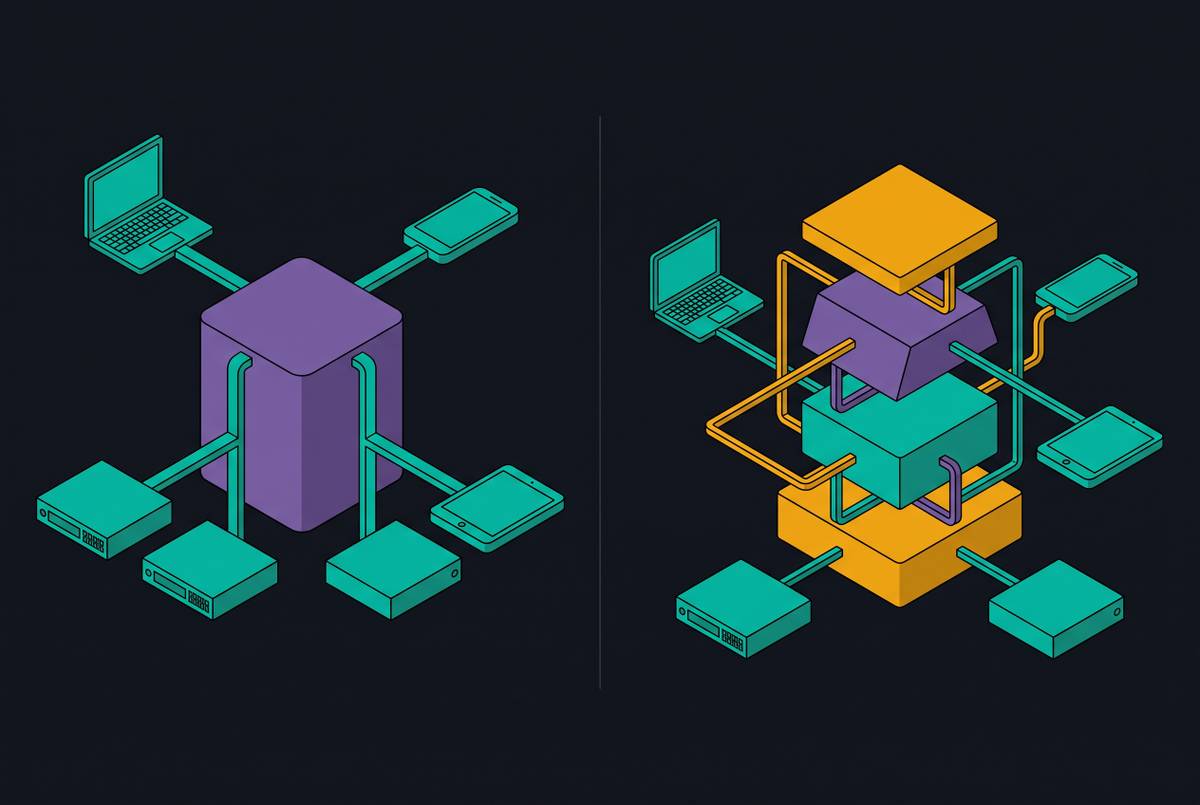
In a fragmented setup, one tool manages devices, another detects threats, and a third tracks compliance. Scripts, manual exports, or middleware move information between them. Each tool can do its job while the person in charge still cannot answer a basic question. Is this user on a compliant, secure device? Answering requires pulling records from three consoles and working out whether they describe the same state at the same time.
That wait costs more during an incident. The threat detection tool shows suspicious activity, but the device configuration and some of the controls needed to act are in other tools. A person reads the alert, opens a ticket, and waits for someone with access to the management tool. The device remains connected while the handoff happens. The failure is not necessarily a missed threat, but a detected threat that does not lead promptly to the required action.
Device management may report that a policy was applied, while the threat tool records activity that suggests someone bypassed it. Neither record on its own shows whether the control held. At audit time, someone has to piece those accounts together from exports taken at different times. The tools have produced information, but the organization still has to supply the connection between detection, enforcement, and proof.
What MDM, EDR, and compliance each actually do — and where each one stops
Mobile device management, or MDM, controls how devices are set up and how they are managed. It enrolls them, enforces encryption and password requirements, restricts applications, and allows remote lock or wipe. Its boundary is device policy. A device can have the required settings and still run malicious activity that those settings do not prevent. MDM establishes the baseline, but cannot establish that everything happening on the device is safe.
MDM also helps put security software on devices without asking every employee to do the steps by hand. It gives security agents the system-level permissions they need. That makes it part of getting protection running. Endpoint detection and response, or EDR, then monitors behavior for activity that policy alone would miss, including zero-day exploits, fileless malware, and lateral movement. It can terminate a malicious process or isolate a compromised device, but it does not replace device enrollment or configuration management.
Compliance sits at a different boundary again. It maps device state and security controls to requirements such as SOC 2, ISO 27001, or HIPAA, records evidence of enforcement, and flags drift. It does not independently establish what happened on the endpoint. In a fragmented stack, it depends on the information supplied by MDM and EDR, so its view can lag behind both. MDM stops at the behavior it cannot detect, EDR stops at the device administration it does not provide, and compliance needs evidence from both to show whether controls held.
What a shared data layer makes possible that three separate tools cannot
With a shared data layer, there is no need to match separate accounts of the same device before taking action. Enrollment status, configuration, detected behavior, and compliance state are all in one record for the device. The platform can therefore see whether a managed device meets its required settings and whether EDR has flagged a behavioral anomaly. No manual correlation step stands between those facts.
Because the functions use that same record, a threat finding can become an input to device enforcement. MDM can enforce encryption and application whitelisting while EDR watches for behavior that suggests a bypass. If a bypass is detected, it can trigger a policy update. Detection now has a direct route to enforcement.
That connection also changes investigation. The configuration history, threat timeline, and compliance record are available together, so an investigator does not have to switch consoles to reconstruct the sequence. Work that took hours of reconciliation can take minutes. The compliance view draws from the same changing state. Evidence can be captured when a control is enforced. Separate tools can exchange information, but periodic exchange cannot provide the same continuously synchronized view without the reconciliation step that creates the delay.
How enforcement changes when MDM and EDR are looking at the same device record
Consider a confirmed threat on a managed device. In the fragmented response, EDR detects it and generates an alert. EDR may have its own ability to isolate the endpoint, but any required action in MDM still has to cross the tool boundary. A person reads the alert, opens a ticket, and passes the request to someone who can act. When containment has to wait for that handoff, the threat stays active and the device stays connected.
In the unified response, the detection and the device controls use the same record. The platform can immediately trigger the required action, choosing among possible responses such as network isolation, critical data backup, or remote wipe. The key change is that the response does not require someone to transfer the threat context into another system. When a deviation is detected, it can also tighten the MDM policy automatically, so enforcement becomes a feedback loop instead of a baseline followed by alerts that are kept separate.
A device that has just enrolled can get the EDR agent and compliance baseline together instead of waiting for each to be deployed on its own. But automatic enforcement still needs to be tuned well, because a false-positive isolation can stop legitimate work. A unified platform can use the device history, the user identity, and the behavioral baseline to help with risk scoring before it acts. Shared context supports a more accurate decision, but it does not remove the need to distinguish a confirmed threat from ordinary activity.
How compliance evidence changes when it is captured live rather than reconstructed
An export shows what a tool recorded at a particular time. Uncertainty about what was true throughout the interval between recordings makes audit preparation difficult in a fragmented setup, even when the team has kept its reports. An IT generalist must gather MDM exports, find the relevant EDR logs, and reconcile their timestamps. The work is retrospective, and gaps in the record leave uncertainty about whether a control stayed in place.
With shared state, configuration, encryption status, patch level, and threat telemetry update in the same data layer. The compliance view shows the device posture as it is now. Controls mapped into the platform can show whether a device meets the relevant requirement as its condition changes. Evidence is collected during enforcement. The record can show when a policy was applied, when the device entered or left compliance, and how quickly a deviation was remediated.
To make the difference concrete, an auditor might ask whether all managed devices had encryption enforced during a given period. A unified platform can answer from its own enforcement history instead of requiring someone to align separate reports. That changes the generalist’s job from reconstructing events to using an existing record. It does not make every compliance obligation automatic. Frameworks also include human-run workflows, so live endpoint evidence supports the wider program. Its specific value is that proof of device controls no longer depends on an audit-time assembly project.
How do SMBs handle MDM, EDR, and compliance without a security team?
For a small business, the hidden requirement of a fragmented stack is a person available to connect it all. Someone has to match up device records, spot gaps in coverage, pass incident context between tools, and pull together compliance evidence. Those tasks compete with the rest of the job. A founder, operations leader, or lone IT generalist cannot treat each handoff as work for a separate security team when that team does not exist.
A fragmented response assumes someone is watching alerts and someone else can promptly make the required device change. Getting ready for an audit assumes there is time to gather records from several systems and work out what they say. For one generalist, those assumptions can consume the entire working day. Buying capable tools does not supply the people needed to keep their outputs in sync, and a policy written once does not stay enforced just because it is still in a document.
Small businesses still have money and data worth attacking, but they have fewer defenses than enterprises. Unmanaged devices and unpatched software make the need for coordinated device management and threat detection concrete. Yet more alerts alone do not give a lean team more capacity to respond. Integration is useful here because it removes work between functions. It can make a security program operable without a dedicated team, while leaving the business responsible for the decisions and human workflows that software cannot take over.
What to look for in a platform that genuinely integrates these three functions versus one that bundles them
The lesson for buyers is to test shared behavior. One login can hide separate databases, scheduled updates, and the same old handoffs. Unified solutions can be more cost-effective for SMBs, with that saving as a possible outcome. The useful tests concern what happens when a device changes, a threat is detected, or an auditor asks for evidence.
First, ask whether the device compliance state changes live or has to wait for a scheduled sync from a separate MDM database. Then ask whether a confirmed EDR threat can trigger a device action without a separate ticket or console. A dashboard alone cannot answer either question. The platform needs to link detection to enforcement so it can use isolation, wipe, or policy changes when those responses fit. These tests separate a common interface from a common operational record.
Next, ask whether the platform holds its own history of control enforcement or simply imports logs that someone must correlate later. The audit record should already show when controls ran and when devices drifted out of compliance. Deployment also deserves scrutiny before a purchase. A system that requires months of professional services to configure can reproduce the complexity it promises to remove. For a business without a security specialist, the practical test is whether an IT generalist without a security background can operate the result.
The platform should have device management, endpoint protection, and compliance enforcement connected from the start. That is more demanding than selling three functions together. It means the business does not have to design the handoffs before it can use the protection. For the lean team, the payoff is time spent deciding how to protect the business, rather than moving information between the tools bought to do it.
Sources
- Connect Your Security Tools to Simplify Endpoint Security Management | Zip Security
- Device and Endpoint Compliance | Zip Security
- Continuous Compliance: Where Monitoring Alone Falls Short and How to Fix It | Zip Security
- Identity Access and Device Management: A Simple Model for Modern SMB Security | Zip Security
- Compliance Evidence Collection: Live Reports vs. Point-in-Time Snapshots