MSP Endpoint Security Delivery Without Per-Client Headcount
MSPs scale security without hiring by consolidating tools and automating response.
MSPs live or die on margin, and margin dies the moment a new client requires a new hire. That's the math this piece is about: how MSPs protect a growing list of clients without adding headcount for each one, and what that model tells SMBs about buying security for themselves.
Client expectations have changed the terms of the deal, too. Security used to be something an MSP could sell as an add-on. Security is now a baseline expectation, priced into the relationship from day one, not a line item clients get asked to approve separately.
At the same time, the threat side of the ledger is getting heavier, not lighter. AI-driven threats are raising the sophistication of attacks and expanding the pressure on defenders. The manual work required per client keeps climbing even as pricing pressure pushes the other way. Run the math forward: more clients, more alerts, more manual triage, and the result is burnout on the team and slower response for the client. That's not a business that scales. It's a business that breaks.
The instinct to fix this by hiring is solving the wrong problem. The lever that actually works is architecture, not headcount.
The fragmented stack is the root cause of the headcount trap
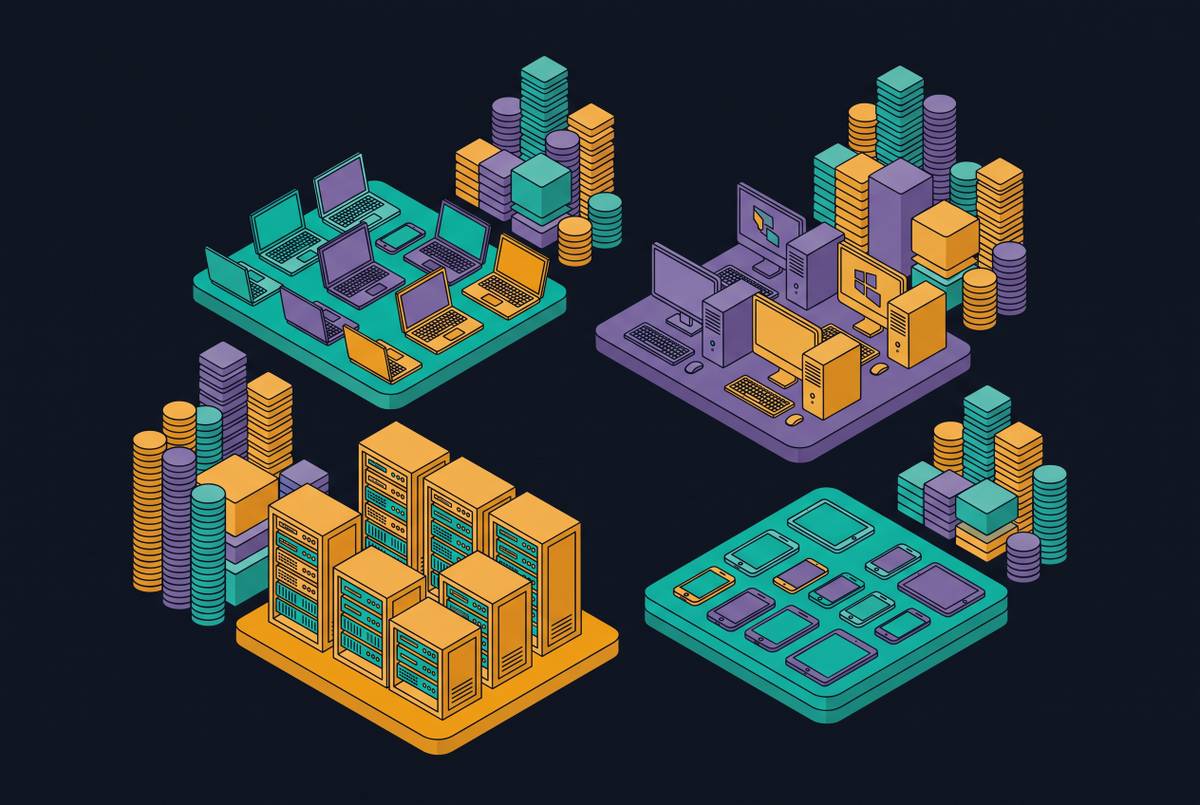
Picture an analyst covering ten clients, each running a different EDR tool, a different RMM platform, a different logging system. Every incident means logging into a different portal, re-learning a different interface, hunting for data that lives somewhere else entirely. That's hours lost to context-switching before any actual security work even starts.
The scale of this problem is bigger than any one MSP. Computerworld data cited in Guardz's statistics shows 67% of enterprises run as many as five separate vendors just to manage and secure their devices. That sprawl multiplies across a client book, and the tool count balloons fast.
Sprawl produces two costs that compound on each other: slower response and more mistakes. Both land on the technician at the keyboard, never on the vendor who sold the tool. And once alert fatigue sets in, the problem gets worse on its own. When every tool marks every alert "urgent," nothing actually is, and the low-fidelity noise from five disconnected systems buries the one signal that mattered.
The threat surface isn't holding still while this sorts itself out, either. Browser-based attacks made up 17% of all endpoint attack vectors in Q2 2025, according to WatchGuard's Internet Security Report, a jump of 5.54 points from the quarter before. A fragmented stack is structurally slow to cover a fast-moving front like that; by the time five tools agree on what's happening, the attack has already moved.
The real cost here is a hidden one. MSPs that can't centralize visibility end up spending more hours managing their own tools than managing the threats those tools are supposed to catch. At ten clients that's an annoyance. At a hundred, it's the whole business model.
What consolidation means in a multi-client environment
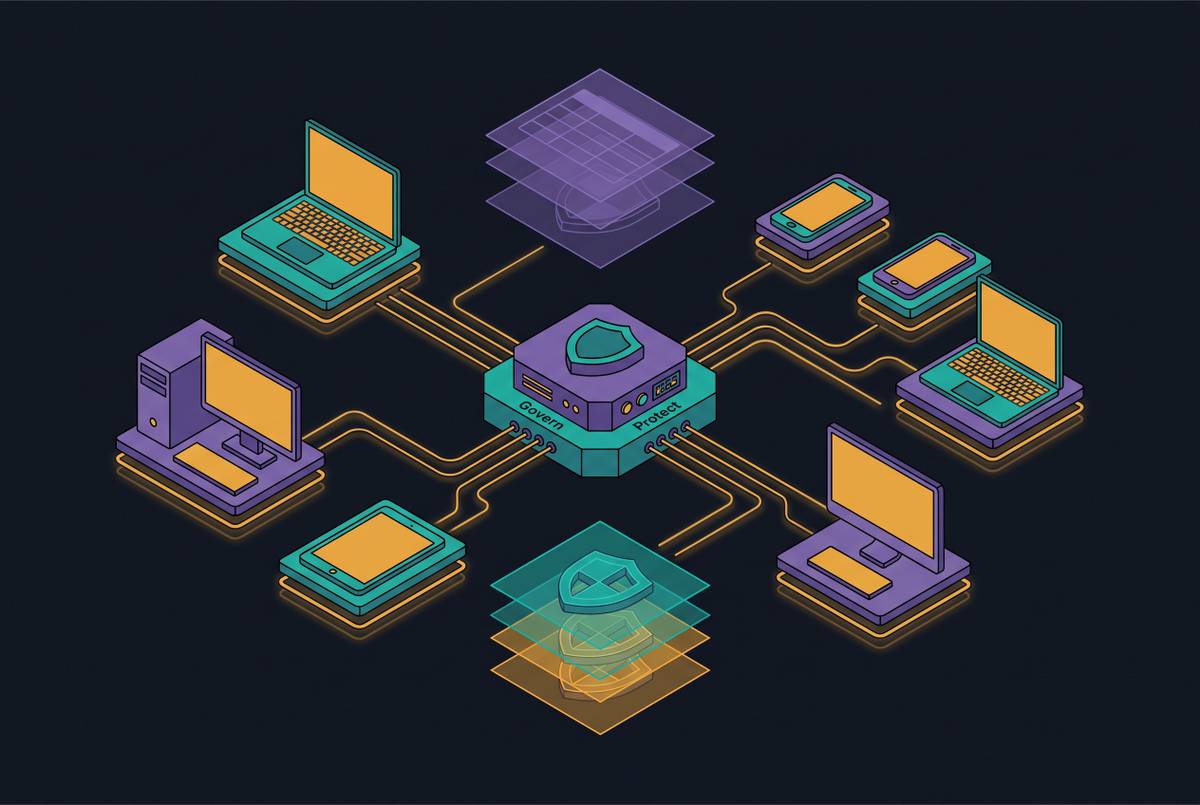
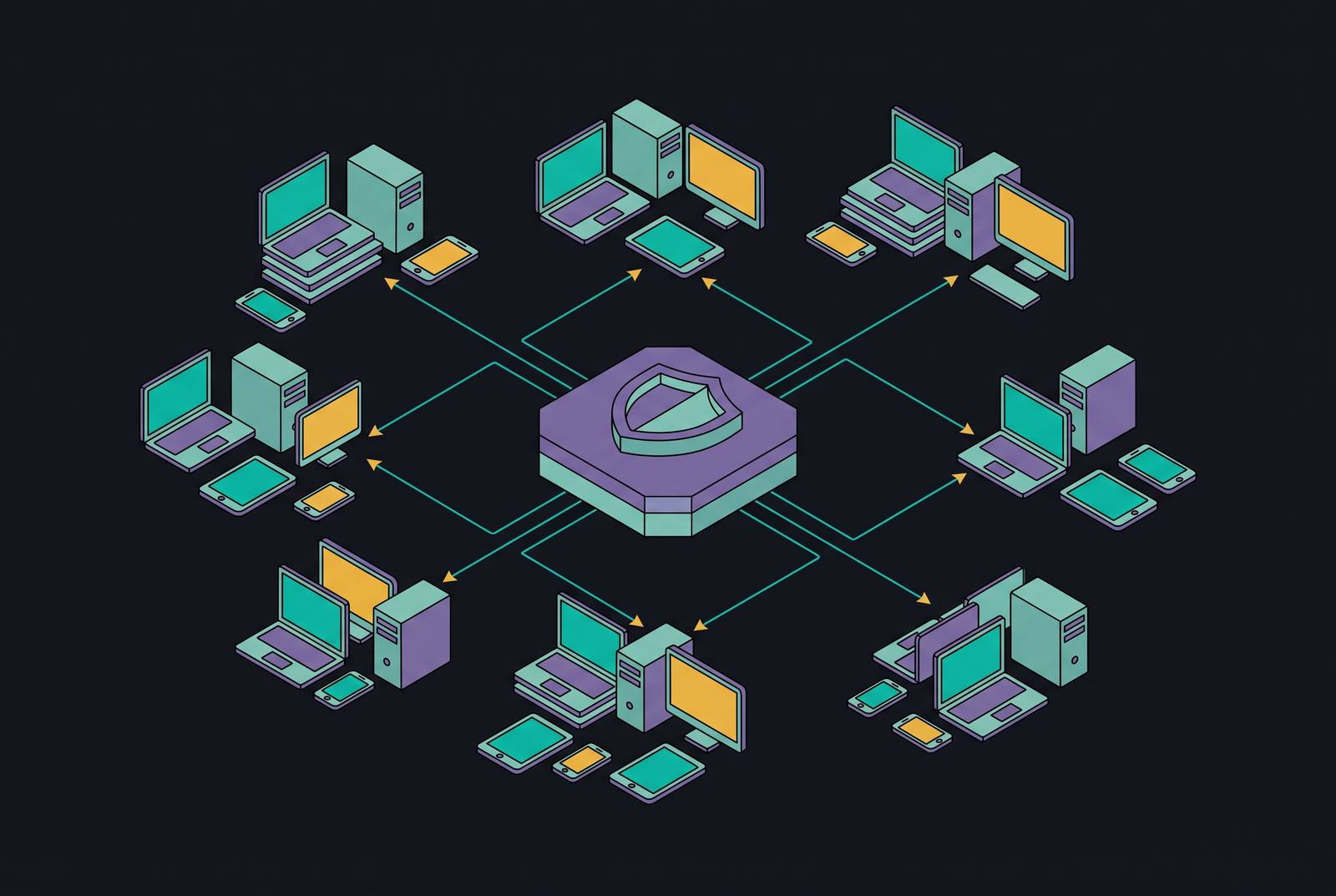
Consolidation gets misread as just "buy fewer tools." It's really about unified visibility: every client's endpoints visible from one dashboard, one consistent policy applied across all of them, and shared telemetry that lets a pattern on client 40 flag a risk on client 41 before it becomes an incident.
Centralizing patch management, encryption, application policy, and configuration into a single platform lets a team prioritize its work by actual risk instead of by whichever client happens to be calling, a shift from babysitting five separate consoles. That's a very different job than babysitting five separate consoles.
Unified management goes further than a combined dashboard, too. It means networks, endpoints, identities, and access controls sit inside one coherent architecture, not five aggregated views bolted together after the fact.
N-able's N-central platform shows what this looks like once it's running at real scale: over 700 pre-built automation recipes and policy enforcement built to manage a vast number of endpoints across upward of 25,000 MSP partners worldwide, without headcount climbing in step with endpoint count.
Consolidation cuts the per-analyst cost of context-switching, and it enforces a consistent baseline that lowers per-client risk at the same time. Both matter. Setting a security floor, MFA everywhere, endpoint protection on every device, centralized logging, recurring vulnerability scans, and writing it into the service agreement, is what keeps exceptions from quietly becoming the norm.
How automation shifts the ratio of technicians to protected endpoints
Automation is where the real leverage sits. MSPs that build their response playbooks into SOAR-connected workflows can carry a lot more client load on the same headcount, and the gap between those firms and ones still triaging by hand only widens over time.
A few categories of automation do most of the heavy lifting:
Automated patching removes one of the most labor-intensive recurring chores on any technician's list. N-able N-central's self-healing remediation can restart a service or run a script at the endpoint the moment something fails, no ticket required. AI-driven alert correlation cuts the noise coming out of monitoring systems, so engineers spend their attention on the alerts that actually matter, a shift Worksent's 2026 landscape piece flags as one of the clearer wins in the space. Automated containment stops a threat in minutes rather than hours, before it can spread across a client's environment. N-able's MDR service handles 90% of threats autonomously, without a human clicking anything. Policy drift detection catches configuration changes as they happen, closing the gap that used to require a manual audit weeks later.
None of this needs custom scripting to stand up, either. N-central's 700-plus automation recipes deploy as-is, which matters because automation infrastructure that requires a full-time engineer to maintain isn't really leverage.
Ransomware doesn't clock out at 5 p.m., but most MSP teams do. That after-hours gap is exactly what automation closes, and it's a gap no hiring plan closes affordably. Automation only earns its place when the detection underneath it is high-fidelity. An MSP that automates response on top of noisy, low-quality telemetry is just automating the wrong answer faster.
Agentic AI as the next layer of operational leverage
There's a real difference between AI automation and agentic AI. Automation runs scripts and rules faster than a human could. Agentic AI makes context-aware decisions on its own, without a human signing off at every step.
Worksent's 2026 MSP landscape analysis points to advanced providers already using agentic AI to adjust security policies on the fly, reallocate resources, and kick off remediation, all without a person in the loop for each action.
Agentic alert management works something like a virtual analyst who never sleeps: prioritizing incoming alerts, surfacing context on a threat in plain language, and recommending what to do next. That addresses alert fatigue at the structural level, not by hiring another person to sift the queue.
MSPs move from reacting to incidents toward operations that tune themselves, with uptime and service consistency improving across a multi-tenant environment as a result.
Fair to say this is still an edge, not a baseline. The MSPs running agentic AI today are ahead of the pack; most providers are still working with automated playbooks and AI-assisted triage, which is a meaningfully different thing than autonomous response. But the trajectory matters for the headcount argument: this layer means the ratio of technicians to endpoints keeps improving without ever hitting a point where the only answer left is to hire.
BYOD and shadow IT as the endpoint visibility problems that automation alone cannot solve
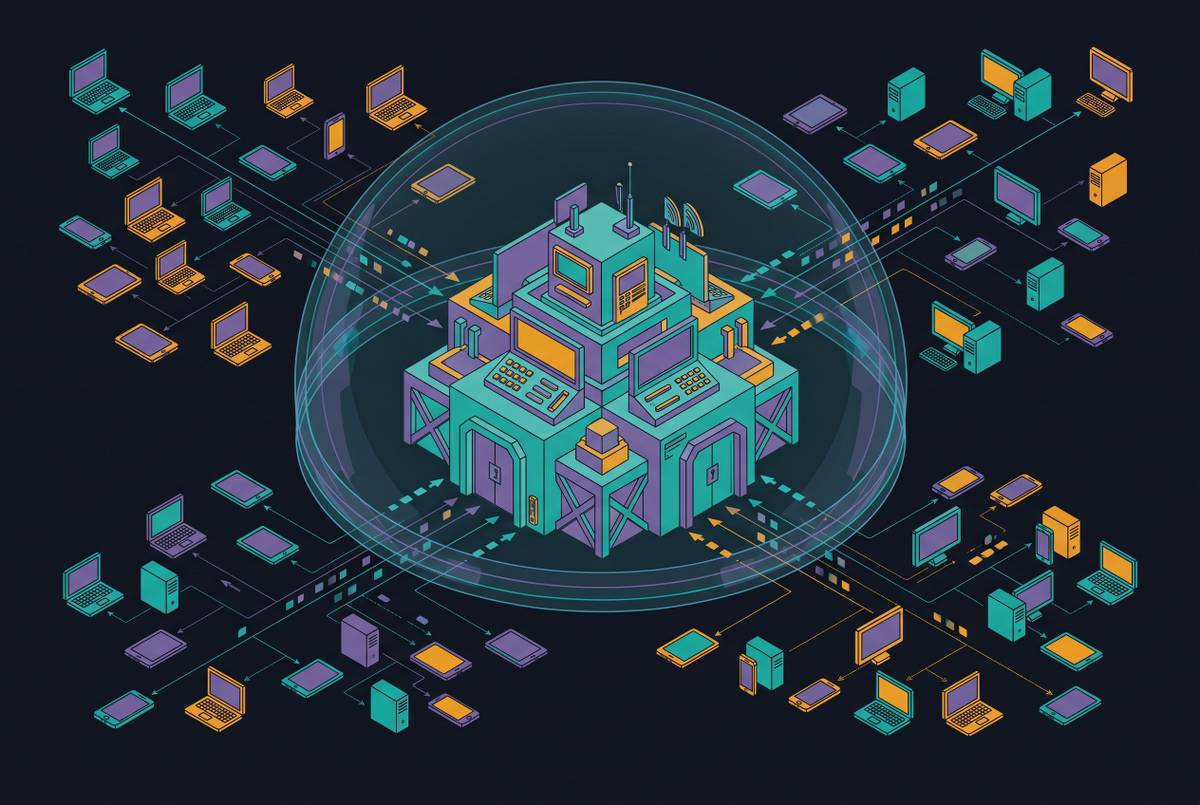
Automation can only protect what it can see, and a huge share of the modern attack surface sits outside that view entirely. Guardz's 2026 statistics, drawing on the State of Remote Work Security research, put the number of remote workers using personal tablets or phones for work at 92%, with 46% of them having saved an actual work file to one of those devices.
That effect appears directly in breach data. Microsoft figures cited in the same Guardz report attribute 80 to 90% of successful ransomware attacks to unmanaged devices. Automation covering only managed endpoints, however good it is, leaves the largest part of the attack surface untouched.
Identity risk follows the same pattern outside the perimeter. Security Magazine data cited by Guardz shows 71% of employees keep sensitive work passwords stored on a personal phone. And it's not just line staff: a 2023 report on cyber safety at work, also cited in Guardz's numbers, found 97% of executives access work accounts from a personal device, so the highest-value targets in any organization are often sitting on the least controlled hardware. Compounding it further, HIPAA Journal data cited by Guardz shows 36% of employees using personal devices for work admit to delaying security updates on them.
Shadow IT sits right next to this problem. Employees adopt unauthorized apps and unmanaged devices at rates that create blind spots no dashboard catches without continuous discovery running underneath it. That's why zero-touch onboarding and ongoing device discovery aren't a nice feature to have. They're the only way an MSP's visibility claims hold up under scrutiny.
The research brief cited here puts a number on the gap directly: 64.5% of companies found unsecured devices that their existing tools were supposed to be covering. That's the real liability exposure for any MSP grading its own homework instead of checking it against reality.
Proving security value to clients: reporting and cyber insurance readiness
Security's biggest sales problem is that when it's working, nothing happens, and nothing happening is hard to put a price on. Clients who can't see the work being done are the ones most vulnerable to a cheaper competitor's pitch, a dynamic widely noted across the MSP industry.
Reporting that ties back to a client's actual business risk, not just a page of technical metrics, is what separates the MSPs that keep clients through a renewal cycle from the ones that lose them on price alone.
Cyber insurance has turned into a forcing function on all of this. Insurers are requiring proof of controls, continuous monitoring, and documented incident response readiness before they'll issue or renew a policy, according to the research brief informing this piece. That's pushed MSPs into building out cyber insurance readiness as its own service line: risk assessments, documentation, audit support, and compliance reporting mapped to whatever framework the insurer wants to see.
Compliance is turning into a growth lane in its own right. N-able, for instance, builds HIPAA, CMMC, and GDPR controls in as a way to walk into regulated verticals without custom-building compliance from scratch, and its EDR FedRAMP editions extend that same logic to federal and defense-industrial-base clients. On the insurance side, N-able's Adlumin MDR Advanced package bundles in a $100,000 cyber warranty, a concrete example of a vendor turning a security guarantee into something an MSP can actually sell as differentiation.
The liability stakes causing all this produce consequences that are not abstract. In 2024, a Sacramento law firm sued its MSP for more than $1 million after a Black Basta ransomware attack, a case being watched as potentially precedent-setting for how much liability an MSP carries when a client gets hit. Documentation and provable coverage have stopped being optional paperwork. They're the thing standing between an MSP and a lawsuit.
Pricing the consolidated model: what MSPs pay per endpoint
Per-endpoint pricing for EDR bundled with a managed SOC is between $5 and $12 a month in 2026, according to figures from flamingo.run's MSP security stack analysis, with providers like Huntress sitting at the lower end, SentinelOne in the middle of the range, and CrowdStrike toward the top.
Partner discounts and volume tiers can reduce per-endpoint costs further as a book of business grows. That pricing mechanic drives the whole consolidation argument: the model gets cheaper per endpoint the bigger the MSP gets, which is the opposite of what happens with headcount.
One pricing detail trips up a lot of cost models: build them on device counts, not seat counts. flamingo.run's analysis makes this point directly, one user carrying a laptop, a phone, and a tablet is three EDR licenses, not one.
Downstream, the SMB client is typically paying somewhere between $10 and $25 per endpoint per month for managed detection and response, or roughly $15 to $50 per user depending on how much active response is bundled in.
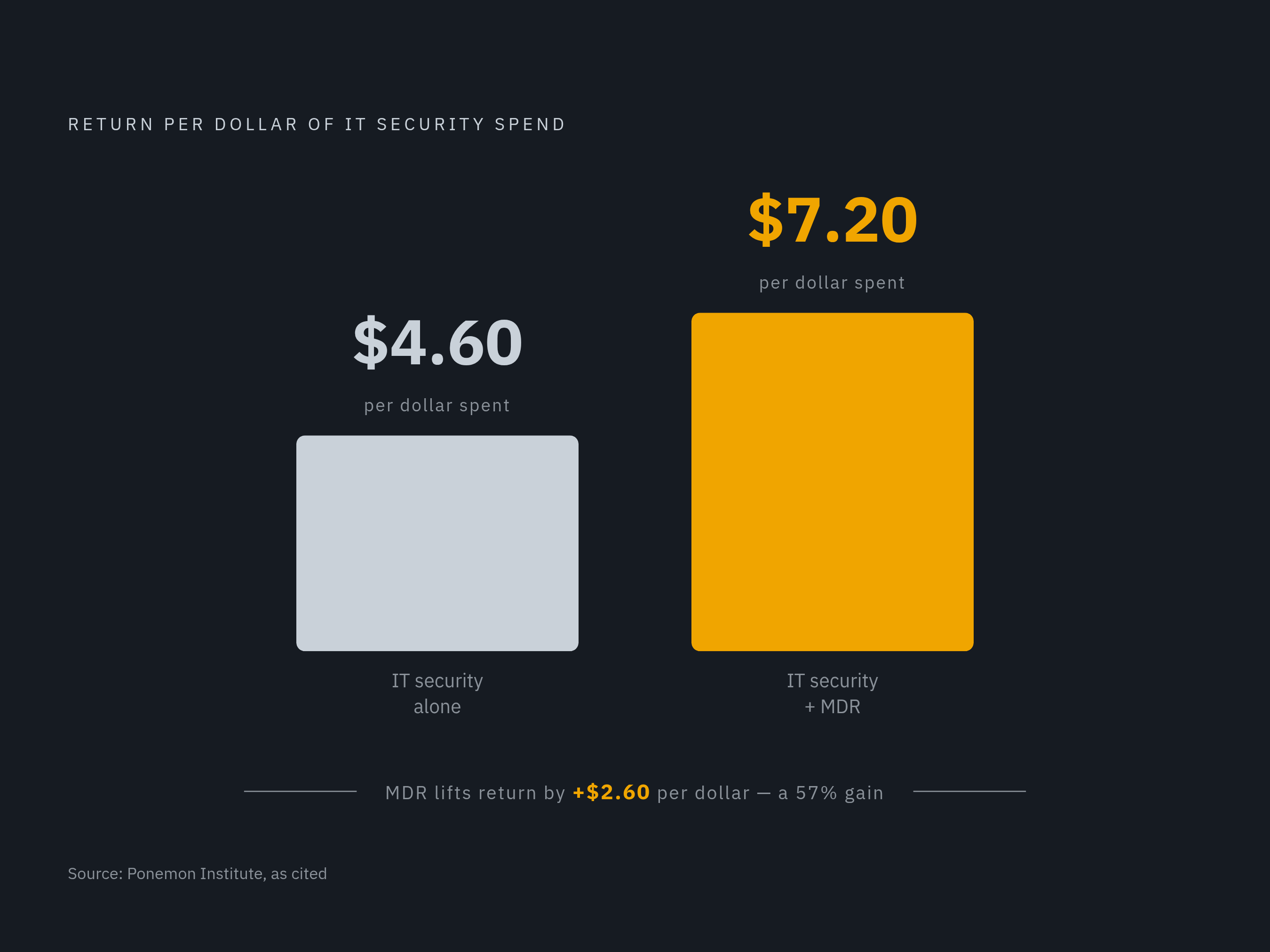
The return on that spend is well documented. Ponemon Institute research puts the avoided breach cost at $4.60 for every dollar an SMB spends on IT security, a figure that climbs to $7.20 when the security tooling is paired with actual managed detection and response, not just software sitting unmonitored on a shelf.
Placing the pricing and the outcomes side by side shows that a fragmented stack spread across five vendors costs more per endpoint and produces worse results. The consolidated model wins on cost and on outcome, not one or the other.
What the MSP scalability model reveals about how SMBs should buy security for themselves
When the client-management layer is stripped away, the MSP's problem and the SMB's problem are the same problem: protect a growing number of endpoints without a matching increase in security expertise or headcount.
Secureframe's 2026 Cybersecurity and Compliance Benchmark Report puts a number on how acute this is: 93% of companies call cybersecurity a top priority, yet many are running with one or fewer full-time security staff. That's an SMB living inside the MSP's exact constraint, minus the MSP's tooling to manage it.
The result tends to be a stack assembled by accident: a tool bought after a bad headline, another added after a close call, a third pitched by a vendor at the right moment. None of it tied to an actual risk assessment. That's the same fragmented, multi-vendor mess that MSPs have spent this piece consolidating their way out of, just running one layer down.
Unified visibility, automated response, and consistent policy enforcement across every endpoint don't require a dedicated security team sitting in-house. They require the right architecture underneath them.
For an SMB buyer, that means a single platform covering device management, endpoint protection, identity, and compliance automation isn't a watered-down version of "real" security. It's the same operational logic an MSP uses to cover hundreds of clients on a flat headcount, scaled down to fit one organization. Platforms built for SMBs without security staff of their own, combining those functions in one place and standing up in days rather than months of configuration, are making the identical architectural bet that MSP consolidation is making at scale.
The outsourcing market still shows some of that confusion playing out. ESET's SMB survey found that among small and midsize businesses in one country. SMBs that outsource security, 35% went with a cyber insurer offering MDR, 27% chose a traditional managed service provider, 21% picked a dedicated MDR vendor, and 17% went with a service provider offering MDR alongside broader security management. That split isn't a sign of a healthy, mature market. It's a sign that a lot of SMBs still haven't landed on a clean answer.
The clean answer was never going to be a sixth vendor. It's one platform where IT and security share the same context, the same policy, and the same ability to respond, the exact bet the MSP world already made and is now scaling.
Sources
- The MSP Landscape in 2026: A Defining Year for the Industry | by Worksent | Medium
- MSP Software Solutions - N-able
- From Chaos to Clarity: How to Optimize Endpoint Security | WatchGuard Technologies
- 36 Endpoint Security Statistics MSPs Should Know in 2026
- MSP Security Stack 2026: What Nobody Warns You
- medhacloud.com
- zipsec.com
- nutmegtech.com